Adding Offloading and Footwear Prescribing to an Existing Clinic
Adding therapeutic footwear and offloading services can expand the care a clinic provides for patients with diabetic foot problems, recurrent pressure lesions, and other conditions affected by abnormal plantar loading. For doctors considering offloading and footwear prescribing training, the essential requirements are pressure assessment, a clear prescription that a vendor can execute, and a structured fit-verification process.
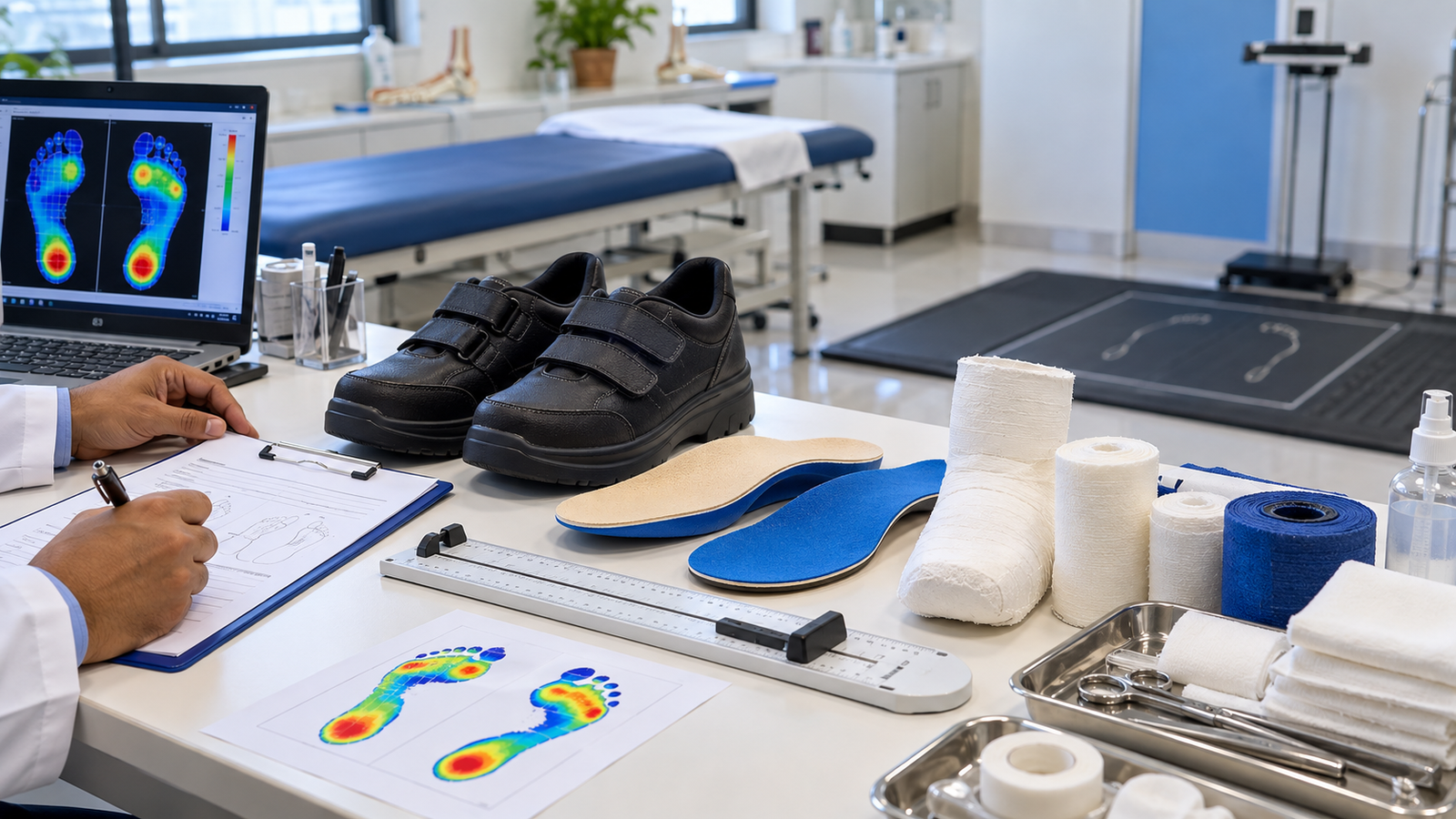
A clinic does not necessarily need a complete gait laboratory to begin. A Harris mat or pedobarogram, a casting kit, and a dependable working relationship with an orthotist can provide a practical starting point.
What Skills Does Offloading Prescribing Actually Require?
Offloading is more than recommending a soft insole or comfortable footwear. The clinician needs to identify where excessive pressure occurs, understand why it occurs, and specify how the device should redistribute that pressure.
Core skills include:
Foot and lower-limb assessment
Identification of high-pressure areas
Recognition of deformity
Neuropathy assessment
Skin and callus assessment
Footwear evaluation
Basic plantar-pressure interpretation
Selection of an appropriate offloading approach
Writing an actionable prescription
Fit verification
Follow-up and modification
The clinician also needs to recognise when a patient’s condition requires more specialised assessment.
The answer depends on the clinician’s qualifications, training, local requirements, and complexity of the patient’s condition.
The important issue is competence.
The person prescribing an offloading device should understand foot assessment, pressure distribution, device selection, fit verification, and situations that require referral.
Simply outsourcing manufacturing does not remove the clinician’s responsibility to assess whether the prescribed device suits the patient.
Building a Reliable Vendor Relationship
An orthotist or footwear vendor becomes an important part of the workflow.
However, the clinic should evaluate vendors systematically instead of selecting one only on price.
Vendor Evaluation Checklist
Check
What to Assess
Prescription interpretation
Can the vendor follow detailed written specifications?
Material options
Are appropriate materials available?
Manufacturing consistency
Are repeat devices produced consistently?
Modification capability
Can the vendor adjust devices after fitting?
Turnaround time
Is delivery practical for patients?
Communication
Can clinical concerns be discussed easily?
Fit support
Does the vendor support adjustments after delivery?
Documentation
Are specifications and modifications recorded?
Quality control
Does the finished device match the prescription?
Follow-up
Can problems be corrected promptly?
One dependable relationship can be more useful initially than working with multiple vendors who follow different manufacturing processes.
Can This Be Outsourced to a Vendor Entirely?
Manufacturing can often be outsourced, but clinical decision-making should not disappear from the process.
A vendor can manufacture the device according to the prescription. The clinician still needs to determine the clinical objective and check whether the finished product meets it.
A practical workflow is:
Clinical assessment → pressure assessment → written prescription → vendor fabrication → fit verification → follow-up.
Skipping the final steps can result in a technically well-made device that does not adequately address the patient’s clinical problem.
How Do You Verify Fit?
Delivery should not mark the end of the process.
The clinic should verify the device before considering the prescription complete.
Fit Verification Protocol
Check whether:
The device matches the written prescription.
The patient’s foot sits correctly within the device.
The footwear provides appropriate depth and space.
The prescribed modifications sit in the intended locations.
The device does not create obvious new pressure points.
The patient can use the device as intended.
The patient understands how and when to use it.
A review has been scheduled.
Document any adjustment requested from the vendor.
How Often Should Devices Be Reviewed?
There is no single review interval suitable for every patient.
Review frequency depends on clinical risk, the reason for offloading, skin condition, previous ulcer history, device type, and whether the patient develops new symptoms.
A practical protocol can include:
Stage
What to Check
Initial fitting
Prescription accuracy, fit, space and comfort
Early review
New redness, pressure areas, discomfort and adherence
Clinical follow-up
Skin condition, callus, wound progress and device effectiveness
Periodic review
Device wear, material compression and changing foot requirements
Immediate review
New pain, redness, blistering, skin breakdown or device failure
High-risk patients may require closer monitoring.
What Should the Patient Check at Home?
Patients need simple instructions because problems can develop between clinic visits.
Advise patients to inspect their feet regularly for new:
Redness
Blistering
Callus
Skin irritation
Pressure marks
Wounds
Swelling
They should also report problems with fit or deterioration of the device rather than continuing to use an uncomfortable device without reassessment.
What Training Is Needed for Clinic Staff?
Staff involved in the service should understand their responsibilities.
Training may cover:
Foot measurement
Basic pressure-assessment workflow
Footwear inspection
Casting assistance
Documentation
Clinical photography
Device handling
Patient instructions
Fit-check workflow
Follow-up scheduling
Clinical interpretation and prescribing decisions should remain with appropriately trained professionals.
The clinic should clearly tell patients what the quoted price includes.
Avoid Building the Service Around Product Sales
The purpose of offloading is clinical.
The clinic should begin by asking:
Where is the harmful pressure, why is it occurring, and what intervention can redistribute it appropriately?
The answer may involve a specific device, footwear modification, or another clinical strategy.
This approach keeps prescribing centred on patient need rather than inventory.
A Practical Workflow for an Existing Clinic
Adding the service gradually can reduce unnecessary expenditure.
Stage 1: Build Clinical Skills
Develop competence in foot assessment, pressure recognition, prescription writing, and fit verification.
Stage 2: Add Basic Equipment
Start with practical pressure-assessment tools, measurement equipment and a casting setup appropriate to the service.
Stage 3: Select a Vendor
Evaluate an orthotist or footwear provider using clear quality and communication criteria.
Stage 4: Standardise the Prescription
Create one clinic prescription template so vendors receive consistent information.
Stage 5: Standardise Fit Verification
Do not hand over a device without checking whether it matches the prescription.
Stage 6: Establish Follow-Up
Create a process for early review, routine review, and immediate reassessment when problems occur.
Developing Offloading Skills Through Training
Adding offloading and footwear services requires more than learning how to take measurements. Doctors and staff need to connect clinical findings with pressure assessment, device selection, prescription details, and follow-up.
At Elegance Vidhyalay, relevant programmes can help doctors and healthcare professionals develop structured skills for diabetic foot care and clinical practice.
Training associated with Dr. Ashutosh Shah, Plastic and Reconstructive Surgeon with 22+ years of clinical experience, also emphasises appropriate patient assessment, clinical decision-making and recognising cases that require more advanced care.
Requirements depend on professional qualifications, training and local rules. The prescriber should have appropriate competence in foot assessment, pressure distribution, device selection and fit verification.
What Equipment Is Needed for Pressure Assessment?
A Harris mat or pedobarogram can provide a practical starting point. Combine pressure assessment with clinical examination, foot measurements, and evaluation of callus, deformity, and previous ulcer sites.
How Do I Write a Footwear Prescription?
Specify the diagnosis, target pressure area, device type, material requirements, heel or forefoot modifications, required footwear depth and planned review date.
How Often Should Devices Be Reviewed?
Review frequency depends on clinical risk and the device. Check fit at delivery, arrange an early review, and continue periodic reassessment. New redness, discomfort, or skin breakdown requires prompt review.
Can This Be Outsourced to a Vendor Entirely?
The vendor can manufacture the device, but the clinic should retain responsibility for appropriate clinical assessment, prescription, and fit verification within the clinician’s professional role.
What Training Is Needed for Clinic Staff?
Staff may need training in measurement, pressure-assessment workflow, casting assistance, documentation, footwear checks, patient instructions, and follow-up. Clinical decisions should remain with appropriately trained professionals.
Conclusion
Effective offloading and footwear prescribing training should teach doctors how to assess pressure, translate clinical findings into a precise prescription, and verify that the finished device achieves the intended result.
A clinic can begin without a full gait laboratory. A Harris mat or pedobarogram, casting kit, and one reliable orthotist relationship can provide a practical starting point.
The quality of the service depends less on owning expensive equipment and more on maintaining a consistent clinical process, a prescription the vendor can understand, and a reliable follow-up system.