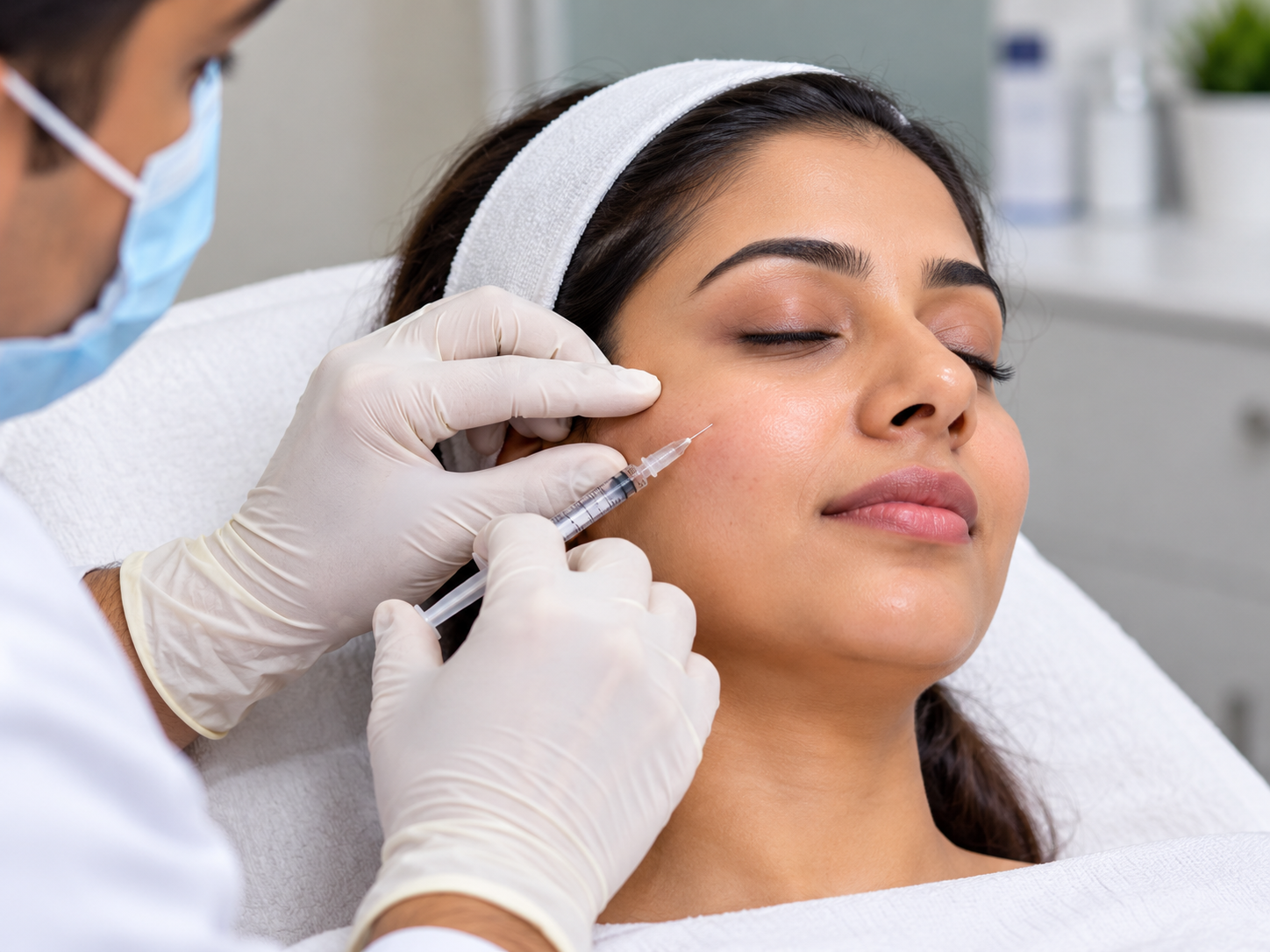
Skin booster training for doctors should cover product selection, facial anatomy, safe injection techniques, bruising prevention, complication management, and realistic treatment timing. For patients preparing for weddings, doctors should ideally begin consultations 8–12 weeks before the event and avoid unnecessary first-time injectables during the final two weeks. These timelines are conservative planning recommendations, not guarantees of recovery.
The wedding season increases interest in skin hydration, facial glow, and minimally invasive aesthetic treatments. Patients often want visible improvements without prolonged downtime.
However, rushed treatment decisions can increase the risk of bruising, swelling, asymmetry and dissatisfaction.
Doctors must understand when to recommend a procedure, when to modify the treatment plan and when to decline a last-minute request.
At Elegance Vidhyalay, aesthetic training emphasises clinical assessment, patient safety and supervised procedural education. Dr. Ashutosh Shah, M.S., M.Ch., D.N.B. (Plastic Surgery), a Plastic, Reconstructive and Cosmetic Surgeon with over 22 years of experience, brings surgical expertise to training in facial anatomy, aesthetic planning and complication prevention.
The November-to-February wedding season often encourages patients to plan aesthetic treatments several weeks before important events.
Many patients seek improvements in skin hydration, texture, and overall appearance while avoiding procedures that require lengthy recovery.
Common requests include:
However, patients may underestimate recovery time.
Even minimally invasive procedures can cause temporary bruising, swelling, tenderness, or unexpected reactions.
Doctors should explain that the goal is not to perform as many treatments as possible before a wedding.
The goal is to create a realistic plan that respects the patient’s skin condition, treatment history, and available recovery time.
Skin boosters include different injectable preparations designed primarily to improve skin hydration or quality rather than produce substantial facial volume.
Training should explain how product composition, rheology, injection technique, and regulatory status influence clinical use.
Hyaluronic acid attracts and retains water within tissues.
Certain injectable hyaluronic acid preparations aim to improve skin hydration and texture.
Doctors must understand product-specific indications, anatomical considerations, and potential complications.
A hyaluronic acid skin booster technique should follow the manufacturer’s approved instructions and supervised clinical training rather than a universal injection pattern.
A glow and hydration filler generally refers to an injectable hyaluronic acid product marketed for improving skin quality.
However, the term does not represent one standard medical product category.
Doctors must distinguish skin-quality injectables from traditional volumising dermal fillers.
The products may differ in concentration, cross-linking, tissue behaviour and intended treatment depth.
Some clinics offer additional injectable preparations containing substances such as polynucleotides or other skin-quality ingredients.
Evidence, regulatory approval and product indications vary.
Doctors should assess each preparation independently rather than assume all injectable skin treatments offer equivalent results or safety.
A structured programme should teach:
Doctors can explore the Botox, fillers, and anti-aging workshop to understand broader injectable aesthetic training.
Pre bridal injectables timing should begin with the event date, treatment history and anticipated recovery period.
An early consultation gives doctors time to evaluate skin concerns and avoid unnecessary last-minute procedures.
| Weeks before event | Procedures to consider | Procedures to avoid | Review point |
|---|---|---|---|
| 12–8 weeks | Consultation, skin assessment, selected first treatments | Unnecessary combinations | Medical history and treatment goals |
| 8–6 weeks | Planned skin booster sessions, if appropriate | Aggressive unplanned treatments | Early response and tolerability |
| 6–4 weeks | Scheduled follow-up or review | Excessive treatment changes | Skin condition and adverse effects |
| 4–3 weeks | Final planned injectable treatment, if appropriate | New high-risk or complex procedures | Recovery and symmetry |
| 3–2 weeks | Conservative skincare and assessment | Unnecessary new injectables | Residual swelling or bruising |
| Final 2 weeks | Gentle skincare and complication review | First-time elective fillers, toxin or skin boosters | Event readiness |
This table provides a conservative planning framework. Some treatments require longer recovery, and individual complications can persist beyond the expected period.
An earlier consultation allows doctors to:
Bruising and swelling may take longer than expected to settle.
Certain products also require time before the final aesthetic effect becomes apparent.
Doctors should avoid promising that every patient will recover within a fixed number of days.
A final review should focus on skin health and whether any further intervention is genuinely necessary.
Doctors exploring a skin booster training for doctors should prioritise programmes that teach clinical judgment alongside injection techniques.
Before recommending treatment, doctors should review:
Medical history: Allergies, medications, bleeding disorders, previous procedures, and relevant medical conditions.
Skin condition: Active infection, inflammation, acne, irritation, or other conditions that may affect treatment suitability.
Treatment history: Previous fillers, botulinum toxin, skin boosters, and any complications.
Patient expectations: Desired improvement, available recovery time and understanding of possible limitations.
Product suitability: Approved indications, treatment areas, contraindications and the availability of appropriate emergency support.
Doctors should also recognise that a patient’s upcoming wedding does not justify relaxing safety standards.
The In-person botox and filler workshop offers a relevant training pathway for doctors exploring supervised injectable education.
For broader learning, the Cosmetic dermatology fellowship provides information about structured cosmetic dermatology training.
One of the most important lessons in aesthetic training is knowing when not to inject.
Doctors should generally avoid starting elective dermal fillers immediately before an important event.
Swelling, bruising, asymmetry, or other complications may remain visible when the patient attends the wedding.
Botox before wedding timing requires careful consideration.
Botulinum toxin effects usually develop over several days and may take approximately two weeks to reach their full effect.
Unexpected asymmetry, eyelid drooping, or dissatisfaction may not resolve before the event.
A first-time treatment one week before a wedding is therefore generally a poor choice.
Combining several new procedures can increase treatment complexity and make it difficult to identify the cause of an adverse reaction.
Doctors should avoid unnecessary combinations, especially when recovery time is limited.
No responsible clinician should guarantee that an injectable treatment will produce a particular appearance without bruising or swelling.
Doctors should explain uncertainty and decline procedures when the risks outweigh the expected benefits.
Recommended faculty safety statement for medical review: Doctors should generally decline first-time elective filler or botulinum toxin treatments during the final two weeks before a major event because the patient may not have sufficient time for the result to stabilise or for complications to be assessed and managed.
Injectable training must include prevention, early recognition and appropriate management of adverse events.
Bruising can occur when a needle or cannula injures small blood vessels.
Doctors should review bleeding risk, relevant medications, facial anatomy and suitable injection techniques.
Patients must not independently stop prescribed anticoagulant or antiplatelet medication before treatment.
Temporary swelling can occur after injectable procedures.
Doctors should explain expected recovery patterns and identify symptoms that require urgent review.
Persistent, severe or rapidly worsening swelling needs clinical assessment.
Lumps may result from product placement, local swelling, inflammation, or other causes.
Management depends on the product and underlying problem.
Doctors should not assume every lump will disappear without evaluation.
Hyaluronic acid injectables can rarely cause vascular occlusion, potentially leading to skin injury or visual complications.
Severe pain, unusual blanching, mottled discoloration, or visual symptoms require immediate recognition and emergency action according to established clinical protocols.
Doctors must have appropriate emergency equipment, product-specific knowledge, and a clear escalation pathway before offering injectable treatments.
The Anti-aging treatment training resource can support theoretical learning about aesthetic treatment planning and patient assessment.
The number of sessions depends on the product, treatment indication, and patient response. Some products involve a planned series of treatments, while others use different schedules. Doctors should follow product-specific guidance and begin planning early enough to assess the results before the event.
Two weeks may not provide sufficient recovery time for every patient. Bruising, swelling, or unexpected complications can persist. Doctors should generally avoid first-time elective injectable treatments this close to a major event, especially when the patient has no previous treatment history.
Combination treatment may be appropriate for selected patients, but timing depends on the peel depth, skin condition, and injectable product. Doctors should avoid injecting through actively irritated or damaged skin and should allow appropriate recovery between procedures.
Skin boosters primarily target skin hydration or quality, while traditional dermal fillers commonly restore volume or alter facial contours. However, both may contain hyaluronic acid, and some products overlap in their effects. Doctors attending a skin booster course in Gujarat should learn the differences in formulation, approved indications, anatomy, and complication management.
Doctors can reduce bruising risk through careful patient assessment, anatomical knowledge, appropriate technique, and review of medications that affect bleeding. However, no injection technique eliminates bruising, and patients should receive realistic recovery advice.
First-time botulinum toxin treatment should ideally be planned well before the event. Treatment immediately before a wedding leaves little time to assess the final effect or manage unwanted asymmetry. Doctors should generally decline first-time elective toxin treatment during the final fortnight.
Skin booster training for doctors must cover more than injection technique. It should teach product selection, facial anatomy, patient assessment, complication recognition, and realistic treatment planning.
An initial consultation approximately 8–12 weeks before a wedding allows more time for appropriate treatment and follow-up.
Doctors should avoid unnecessary first-time injectable procedures during the final two weeks before an important event.
Skin boosters, volumising fillers and botulinum toxin have different indications, onset patterns and potential complications.
Bruising, swelling, lumps and vascular complications require proper prevention, recognition and management.
At Elegance Vidhyalay, structured education should help doctors develop the confidence to recommend suitable treatments and decline requests when patient safety or recovery time makes an elective procedure inappropriate.
Successful pre-bridal aesthetic planning means protecting the patient’s health and expectations, not simply delivering a last-minute cosmetic treatment.