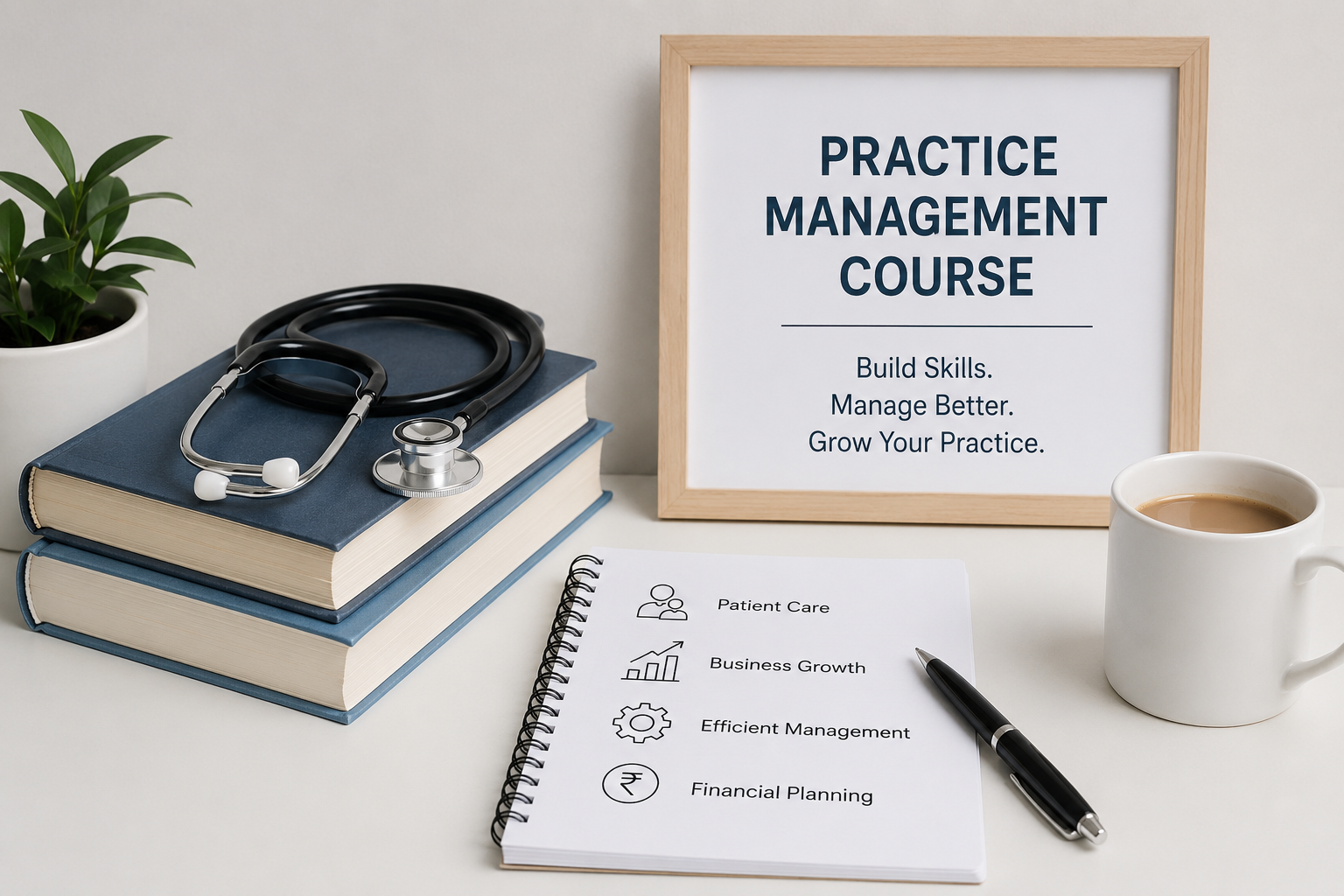
Yes, for many doctors, a practice management course Guide can be a worthwhile investment, especially if they plan to run a private clinic, lead a healthcare team, or expand their medical practice.
While medical education equips doctors with the knowledge and skills to diagnose and treat patients, it often provides limited exposure to managing the business side of healthcare. Running a successful practice involves much more than clinical expertise—it requires leadership, financial planning, patient communication, staff management, and efficient clinic operations.
This is where a practice management course can make a meaningful difference.
A practice management course helps doctors develop the skills needed to manage and grow a healthcare practice effectively. Instead of focusing on medical treatment, these programs teach practical aspects of running a clinic or hospital department.
Common topics include:
These skills can help doctors build an organized, patient-focused, and sustainable practice.
Many doctors become clinic owners or healthcare leaders without receiving formal training in business or administration. As a result, they often learn through trial and error.
A structured course can help doctors understand how to:
These skills complement clinical expertise and contribute to the long-term success of a medical practice.
For many healthcare professionals, the answer is yes.
The value of a practice management course depends on the quality of the curriculum, the experience of the faculty, and how practical the training is. Programs that include real-world case studies, interactive learning, and mentorship often provide greater long-term benefits than those focused only on theory.
When evaluating a course, look for experienced mentors who understand both medicine and healthcare management. For example, institutions like Elegance Vidhyalay offer programs designed for doctors, with guidance from experienced educators such as Dr. Ashutosh Shah, who brings over 22 years of experience in medical education and healthcare leadership. Learning from faculty with practical experience can help participants apply concepts more confidently in their own clinical settings.
A practice management course can be valuable for:
Whether you’re starting your first clinic or looking to improve an existing one, management skills can support both patient care and operational efficiency.
Before enrolling, consider the following:
Choosing a program that focuses on practical implementation can provide greater value than one based solely on theoretical concepts.
A practice management course Guide isn’t essential for every doctor, but it can be highly beneficial for those who want to build a well-organized, patient-centric, and sustainable healthcare practice. Clinical expertise remains the foundation of medicine, but combining it with leadership and management skills can help doctors navigate the challenges of modern healthcare more effectively.
If you’re exploring professional development opportunities, take time to compare course content, faculty experience, and learning outcomes before making a decision. If you’d like to know more about the Practice Management Course at Elegance Vidhyalay, including eligibility, curriculum, or upcoming batches, you can visit the Contact Us page for detailed information.
Yes. It helps bridge the gap between medical education and the practical aspects of running a clinic or healthcare practice.
Absolutely. Learning from experienced professionals, such as Dr. Ashutosh Shah, who has more than 22 years of experience, can provide practical insights that go beyond textbooks.
Yes. Most courses cover clinic setup, operations, finance, patient experience, compliance, and leadership.
Look for an updated curriculum, experienced faculty, practical training, mentorship opportunities, and positive learner feedback.
Visit the Admissions or Contact Us page to learn about eligibility, course fees, upcoming batches, and the enrollment process.