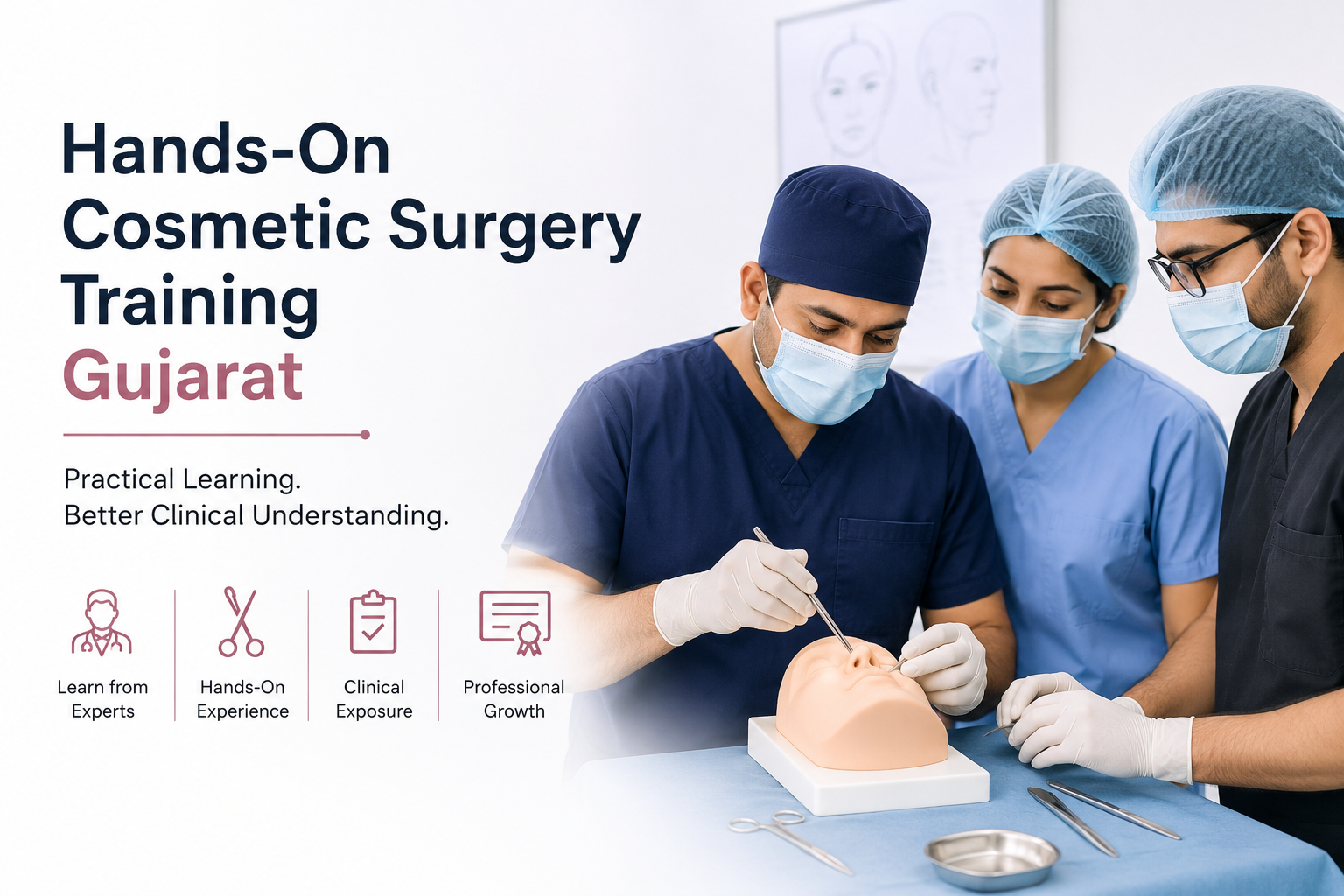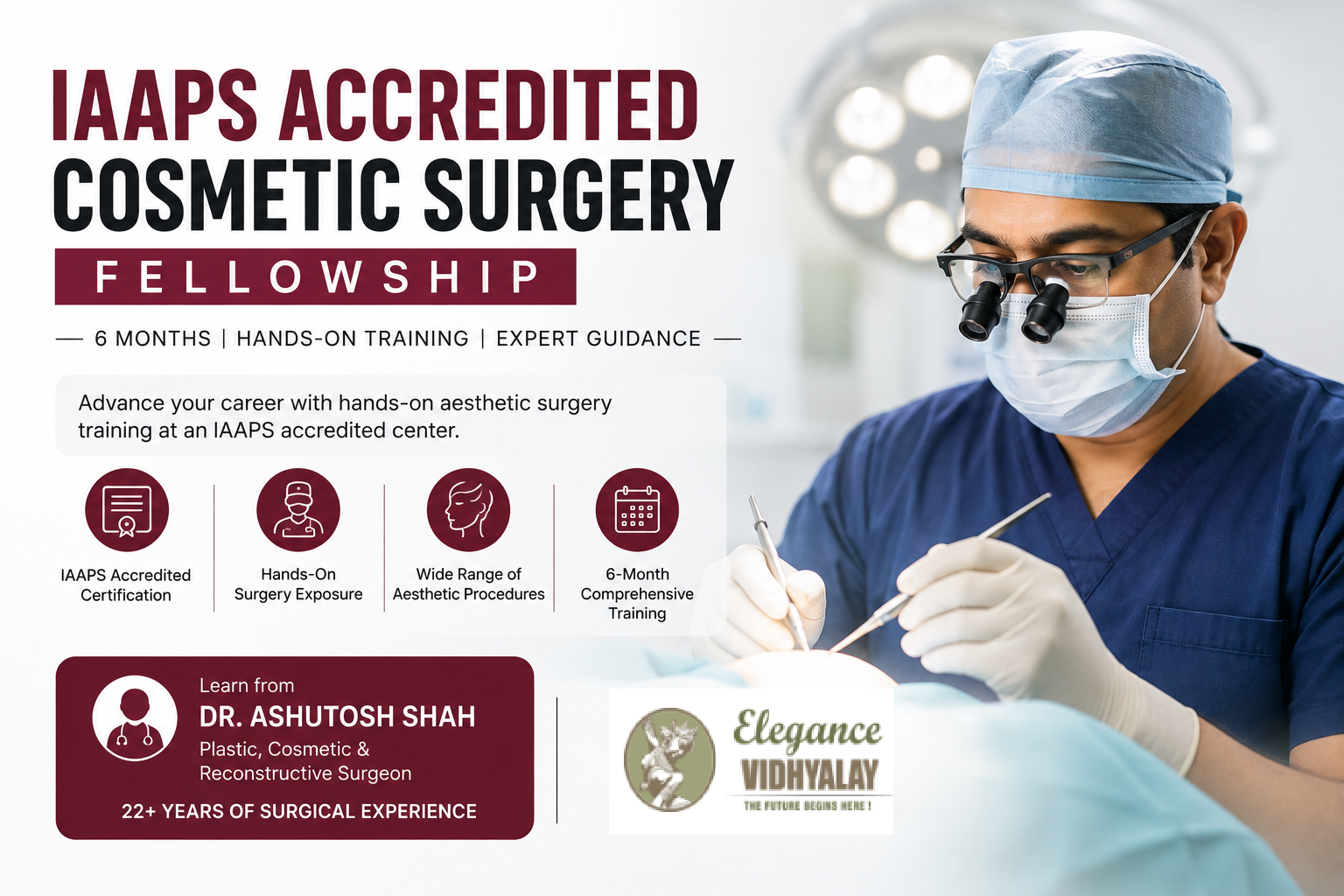
A cosmetic surgery fellowship in India can provide structured exposure to aesthetic procedures through clinical teaching, live surgery observation, supervised practical learning, and real-patient consultations. The programme is intended for appropriately qualified doctors working toward greater exposure in aesthetic practice, with learning and assessment supported by supervised cases and case-log documentation.
For doctors comparing fellowship programmes, the course name alone is not enough. Duration, contact days, hands-on hours, faculty supervision, case exposure, assessment, eligibility, and certification all need to be considered before enrolling.
This guide explains the key specifications doctors should check when evaluating a cosmetic surgery fellowship and how those factors affect the practical value of training.
| Specification | Actual Value |
|---|---|
| Duration | Confirm from programme |
| Contact days | Confirm from programme |
| Hands-on hours | Confirm from programme |
| Trainees per station | Confirm from programme |
| Supervised case minimum | Confirm from programme |
| Assessment method | Confirm from programme |
| Certificate awarded | Confirm from programme |
| Fee band | Confirm from programme |
| Next intake | Confirm from programme |
These figures are important because two programmes described as fellowships may provide very different amounts of clinical exposure.
Doctors should confirm the current specifications directly from the cosmetic surgery fellowship page before applying.
Duration should be assessed in more detail than simply asking whether a programme lasts weeks or months.
Three separate figures are useful:
IAAPS fellowship duration tells you how long you remain enrolled in the programme.
Contact days indicate how many days involve direct teaching, faculty interaction, clinical observation or practical sessions.
Hands-on hours indicate how much time is specifically allocated to practical training rather than lectures or observation.
This distinction is particularly important for practising doctors. A fellowship may run over an extended period while concentrating physical attendance into specific training blocks. Another programme may require more continuous attendance.
Before enrolling, request a written schedule showing how training time is divided among:
Doctors should also clarify what the provider means by hands-on cosmetic surgery training.
Watching a procedure is educational, but observation should not automatically be counted as personally performing a procedure under supervision. Similarly, assisting a surgeon and performing a defined procedural step are different levels of exposure.
This information becomes especially important when comparing training with the time and income lost by being away from an existing practice.
Eligibility should always be checked before paying an application or course fee.
According to the supplied programme brief, the fellowship is intended for plastic surgeons, cosmetic surgeons, dermatologists and MBBS doctors working in aesthetic practice. However, eligibility for admission should not be confused with permission to independently perform every procedure covered or observed during training.
A fellowship does not automatically expand a doctor’s statutory scope of practice.
Before applying, doctors should confirm the current cosmetic surgery fellowship eligibility requirements and prepare whatever documentation the programme requests.
Depending on the programme, documentation may include medical qualification certificates, medical registration details, identity documents, photographs, professional experience details and other application records.
Doctors should also ask whether different participants receive different levels of practical exposure according to their existing qualifications and experience.
This matters particularly when a programme accepts doctors from multiple professional backgrounds.
At Elegance Vidhyalay, doctors considering structured aesthetic training should review the programme’s eligibility, curriculum, and practical format before enrolment rather than choosing solely on the fellowship title.
Case exposure is one of the most important specifications to examine.
A statement such as “extensive hands-on training” is difficult to evaluate without understanding what each trainee actually does.
Ask the programme to distinguish among:
Cases observed: The trainee watches the faculty or operating team.
Cases assisted: The trainee participates as an assistant under appropriate supervision.
Procedural steps performed under supervision: The trainee performs defined components where appropriate and permitted.
Cases independently managed: This is a different claim altogether and should not be assumed from participation in supervised training.
A useful case log should document the nature of the trainee’s involvement rather than simply listing procedure names.
Doctors should ask:
Clinical case numbers can depend on patient availability, consent, and suitability. For that reason, doctors should be cautious about unrealistic guarantees.
Quality of supervision also matters alongside quantity. Twenty cases with little individual participation may offer a different learning experience from fewer cases involving structured teaching, feedback and supervised procedural exposure.
A certificate should accurately reflect what the participant has completed.
Before enrolling, ask how the programme determines successful completion.
Assessment may potentially involve:
The exact assessment method should be obtained from the programme.
Doctors should also establish who awards the final certificate and precisely what that certificate represents.
A fellowship certificate should not automatically be interpreted as equivalent to a recognised postgraduate degree, specialist registration or statutory specialty qualification.
Similarly, completing training in a procedure does not automatically mean the participant may advertise themselves as a specialist in that field.
Doctors interested specifically in programme accreditation can separately review the IAAPS accredited fellowship information and understand what the stated accreditation applies to before concluding professional recognition.
The fellowship fee should be considered as part of the total cost of training, not in isolation.
A useful calculation is:
Total investment = fellowship fee + travel + accommodation + time away from practice + additional training-related expenses
For an independently practising doctor, lost OPD or procedure income may represent a substantial part of this investment.
Before paying, ask what the quoted fee includes.
For example, clarify whether it covers:
Also ask whether GST or other applicable charges are included in the quoted amount.
Doctors specifically comparing costs can review the information on IAAPS fellowship fees before making a decision.
Do not judge a fellowship solely by whether it is expensive or inexpensive. A higher fee does not guarantee better practical exposure, while a lower fee does not necessarily mean poor training.
Compare the fee against actual faculty time, case exposure, supervision, facilities, and assessment.
Before joining a cosmetic surgery fellowship in India, evaluate the programme as you would any significant professional investment.
Start with the faculty.
Review who will actually teach and supervise you, rather than only looking at names associated with promotional material. Consider qualifications, relevant clinical experience, and the amount of direct teaching time each trainee receives.
Training under Dr. Ashutosh Shah, a Plastic and Reconstructive Surgeon with 22+ years of clinical experience, provides participants with exposure to an experienced clinical perspective; doctors should still assess the complete programme structure and whether it matches their individual learning goals.
Next, evaluate the practical component.
Ask how many trainees share each practical station and how much individual exposure is expected. Determine whether “hands-on” means simulation, assisting, supervised procedural participation, or another training format.
Review the assessment system and case log as well.
A programme that advertises substantial clinical exposure should be able to explain how that exposure is documented and evaluated.
Before enrolling, also verify:
Doctors who want a broader framework for comparing programmes can use this guide on how to choose a fellowship before committing to a particular course.
Cosmetic surgery involves more than learning procedural steps.
Patient selection, anatomical assessment, treatment planning, understanding limitations, recognising complications and knowing when not to perform a procedure are all important components of training.
Supervised exposure allows trainees to understand the reasoning surrounding a procedure.
For example, two patients requesting a similar cosmetic change may require very different treatment plans because of anatomy, medical history, expectations or previous procedures.
This is why case discussions and consultations can be as educational as observing an operation.
Training should therefore not be judged only by the number of procedures listed in a brochure.
A stronger question is:
What level of understanding and supervised exposure will I have for each procedure by the end of the programme?
Doctors should be careful with this distinction.
A fellowship can provide additional education and clinical exposure, but completing a fellowship does not automatically replace recognised medical qualifications, specialist training, registration requirements or other professional obligations.
What a doctor may perform independently after training depends on factors beyond the certificate itself, including prior qualifications, demonstrated competence, applicable regulations, clinical privileges and the particular procedure.
The fellowship should therefore be viewed as additional professional training, not as a shortcut around formal qualification requirements.
Doctors should accurately describe the programme they completed and avoid claims that could imply qualifications or specialist status they do not hold.
The answer depends on the doctor and the programme.
For someone already working in aesthetic practice, structured training may provide valuable exposure to patient assessment, procedure planning, operative observation, supervised techniques and complication awareness.
However, value depends on what actually happens during the fellowship.
Before deciding, compare:
Duration → contact days → practical hours → supervised cases → faculty access → assessment → certification → total cost.
If these details are clearly documented and match your training goals, the programme is easier to evaluate objectively.
If basic specifications remain vague even after you ask for them, obtain clarification before paying.
Ultimately, the best cosmetic surgery fellowship in India for an individual doctor is not necessarily the one advertising the largest procedure list. It is the programme whose eligibility, supervision, case exposure, assessment and training format appropriately match that doctor’s qualifications and learning objectives.
Eligibility varies by programme. The supplied fellowship brief includes plastic surgeons, cosmetic surgeons, dermatologists and MBBS doctors working in aesthetic practice. Applicants should confirm current eligibility requirements directly with the programme before enrolling.
The duration should be confirmed from the current programme specifications. Ask separately about total fellowship duration, mandatory contact days, and practical training hours, as these figures describe different aspects of the training commitment.
Confirm the current number directly with the programme. Also ask how “hands-on” hours are defined and whether they represent simulation, assisting, supervised procedural participation, or another form of practical exposure.
The exact certificate and awarding body should be confirmed before enrolment. Doctors should understand what the certificate documents and should not assume it is equivalent to a recognised postgraduate degree or specialist qualification.
Fees vary according to the programme and intake. Request a written breakdown covering tuition, practical training, assessment, certification, materials and any additional charges, along with cancellation and refund terms.
That depends on the fellowship schedule and required attendance. Practising doctors should compare contact days, hands-on sessions, travel requirements, and assessment dates with their OPD commitments before enrolling.