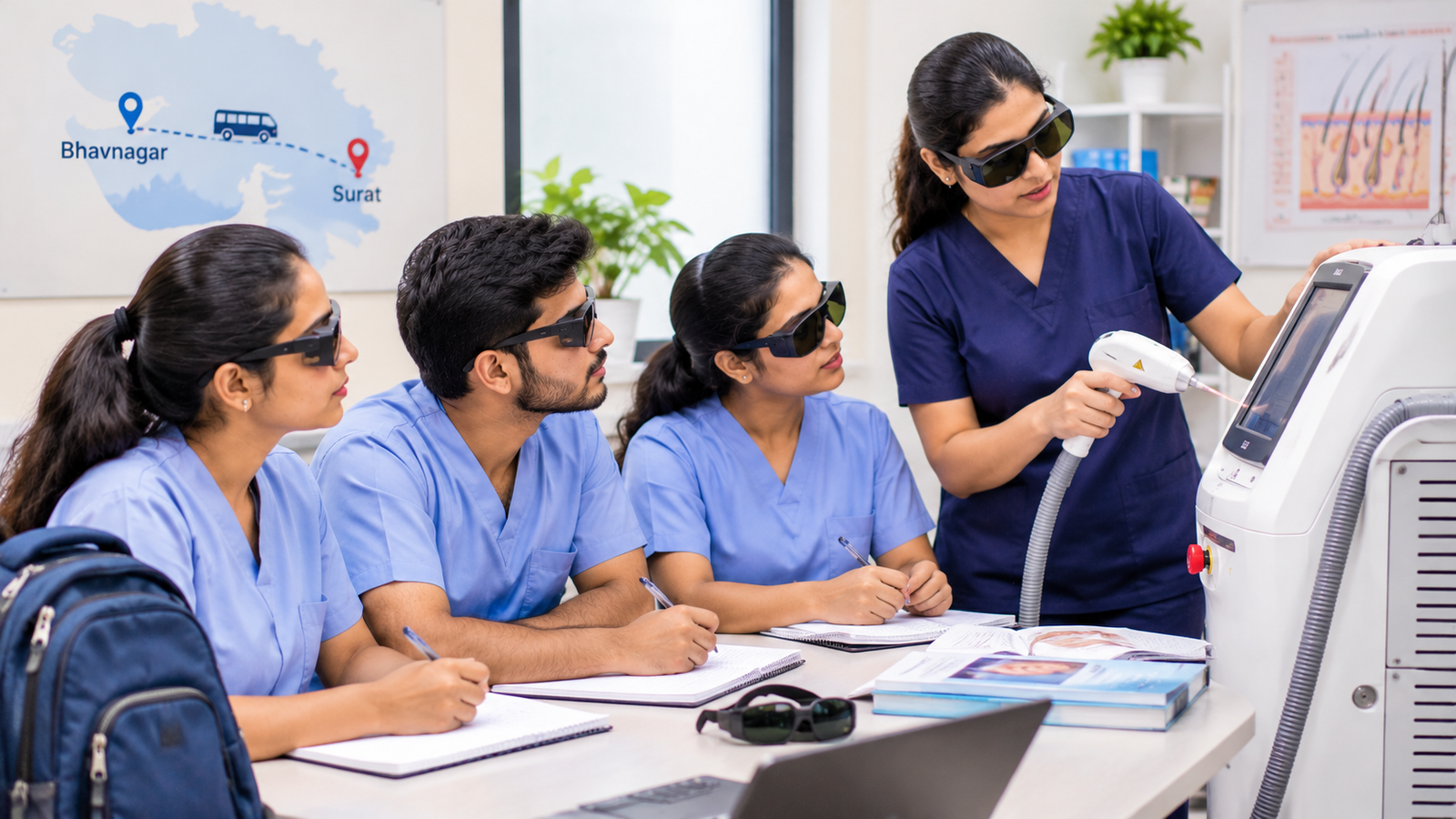
Laser training course for students from Bhavnagar can explore laser training courses in Surat that combine classroom teaching with supervised hands-on practice. Before enrolling, students should consider course duration, fees, practical training hours, certificate details, and accommodation requirements. Planning travel and educational expenses in advance can make the training experience more manageable.
At Elegance Vidhyalay, associated with Dr. Ashutosh Shah, Plastic, Reconstructive and Cosmetic Surgeon, aspiring students can explore cosmetic laser education and professional skill development opportunities.
Laser technology is used in various aesthetic and dermatological applications. A structured training programme helps students understand equipment, safety principles, professional responsibilities and appropriate clinical support activities.
A cosmetic laser training programme introduces students to theoretical concepts and supervised practical activities relevant to aesthetic laser technology.
The curriculum may include the following learning areas.
Students may learn about basic laser principles, different equipment categories and the interaction between light energy and skin.
Understanding these concepts helps students recognise the importance of equipment selection, safety measures and professional supervision.
Knowledge of skin structure is important when studying cosmetic laser applications.
Theoretical modules may introduce skin layers, pigmentation, hair follicles and factors that influence skin sensitivity.
Students should understand these concepts without independently diagnosing skin conditions or prescribing treatments.
Training may introduce the principles behind laser hair reduction, pigmentation management, skin rejuvenation and selected aesthetic applications.
The appropriate use of laser technology depends on professional qualifications, equipment specifications and individual clinical assessment.
Safety education may cover protective eyewear, equipment checks, hygiene practices, controlled training environments and prevention of accidental laser exposure.
Students should understand that inappropriate laser use can cause burns, eye injuries and pigmentation changes.
Practical sessions may involve equipment demonstrations, simulation exercises, workstation preparation and observation of authorised clinical activities.
For more information about related educational opportunities, explore cosmetic laser technician training india.
Eligibility for cosmetic laser education depends on the course level, intended learning outcomes and professional responsibilities associated with the programme.
Different training programmes may be suitable for different educational backgrounds.
Qualified healthcare professionals may pursue relevant laser education to develop knowledge within their existing professional scope.
Advanced clinical applications may require specific medical qualifications and additional recognised training.
Individuals working in beauty and aesthetic services may explore suitable educational programmes covering equipment awareness, safety principles and permitted non-medical activities.
Their professional responsibilities must remain within applicable legal and regulatory requirements.
Students interested in clinical assistance may explore introductory laser technology programmes that focus on equipment preparation, hygiene, documentation and supervised support activities.
Some introductory programmes may accept applicants without previous laser training experience, depending on their educational qualifications and admission criteria.
Before completing laser training course admission, students should understand whether the programme matches their background and intended career.
Other educational programmes may have different entry requirements. For example, filler injection training india relates to specialised clinical education requiring appropriate professional qualifications.
Laser technician training does not automatically authorise independent medical treatment or invasive aesthetic procedures.
Course duration is an important consideration for students who need to organise travel, accommodation, employment or existing educational commitments.
The total duration may depend on the number of theoretical modules, supervised practical sessions and assessments included in the programme.
Classroom teaching may introduce laser technology, skin anatomy, equipment terminology, patient safety and professional ethics.
Theoretical education provides the foundation for understanding practical demonstrations and workplace responsibilities.
Supervised practical sessions help students become familiar with approved equipment, safety procedures and training exercises.
When comparing programmes, students should distinguish between total course hours, observation hours and supervised hands-on practice.
Regular batches may follow a structured daily or weekly timetable.
This arrangement may suit students who can attend scheduled sessions consistently throughout the programme.
A laser training course weekend batch may be suitable for working professionals or students managing other commitments, when such batches are available.
Weekend programmes may distribute learning activities across multiple sessions rather than consecutive weekdays.
Course completion may require minimum attendance, participation in practical exercises and successful completion of assessments.
Students should allocate sufficient time for the complete programme rather than planning only for classroom sessions.
A suitable timetable can help students balance educational commitments with travel and personal responsibilities.
The overall cost of cosmetic laser education depends on the programme duration, training facilities, equipment access, faculty involvement and learning resources.
Tuition fees generally cover scheduled theoretical sessions and instructor-led educational activities.
The number and depth of modules may influence the overall programme cost.
Practical education may include equipment demonstrations, supervised exercises and access to approved training facilities.
Students should consider the quality and duration of practical learning when evaluating educational value.
Course fees may include notes, presentations, learning resources and a completion certificate.
Examination charges, training kits and additional modules may involve separate expenses.
Students should also budget for expenses beyond tuition, including:
Payment arrangements may include full payment or instalment-based options, depending on the programme’s admission policies.
Comparing the complete educational cost helps students prepare a realistic budget without overlooking additional expenses.
Students travelling for cosmetic laser education should organise transportation, accommodation and daily schedules before their training begins.
A practical travel plan can reduce unnecessary expenses and help students maintain regular attendance.
Students can consider available train, bus or private vehicle options according to their budget and preferred travel schedule.
Travel duration depends on the selected service, departure point and traffic conditions.
For early morning classes, arriving the previous evening may be more convenient than travelling on the same day.
Students attending consecutive training sessions may find temporary accommodation more practical than travelling daily.
Possible accommodation options include:
The suitability of each option depends on budget, availability, safety and distance from the training institute.
Accommodation, meals, local transportation and personal expenses should form part of the overall training budget.
Students attending longer programmes may benefit from comparing weekly or monthly accommodation rates.
Students should organise educational documents, identity proof, admission receipts, notebooks and any required personal training supplies before travelling.
Keeping digital copies of important documents can also simplify the admission process.
Return travel should account for the complete training schedule, including practical sessions and final assessments.
Flexible travel arrangements may be helpful if educational activities require additional attendance.
Completing cosmetic laser education may help students develop knowledge relevant to aesthetic services, healthcare support and further professional training.
Career opportunities depend on educational qualifications, recognised credentials, practical experience and employer requirements.
Eligible graduates may explore appropriate support responsibilities involving equipment preparation, documentation, appointment coordination and workplace organisation.
Students with suitable qualifications may pursue permitted roles in aesthetic service environments while following applicable safety standards and professional limitations.
Graduates may continue developing their knowledge through recognised educational programmes relevant to their career goals.
Specialised programmes such as rhinoplasty training for surgeons serve a different professional audience and require appropriate surgical qualifications.
A laser training certificate does not replace medical qualifications, professional registration or regulatory requirements.
For course information and enrolment enquiries at Elegance Vidhyalay, visit the contact us page.
A weekend batch may be available depending on the training programme and admission schedule. Weekend classes can help working professionals and students manage existing commitments while attending theoretical and practical sessions. The total training duration, attendance requirements and assessment schedule may differ from regular batches.
Students considering a laser training course for students from bhavnagar can explore paying guest accommodation, hostels, budget hotels and short-term rental options near the training institute. Accommodation assistance depends on available institutional services. Students should consider travel convenience, safety, rental charges and meal arrangements when selecting accommodation.
The number of practical training hours depends on the selected course curriculum and educational objectives. Practical education may include equipment demonstrations, simulation exercises, supervised activities and clinical observation. Students should distinguish between total scheduled training hours and the time specifically allocated to supervised hands-on learning.
A pre-admission visit may help prospective students understand the classroom environment, training facilities, available equipment and educational approach. Visits depend on institutional arrangements and scheduled activities. Observing the learning environment can help students evaluate whether the programme matches their educational background, career interests and practical training expectations.
Upcoming batch dates depend on the admission calendar, faculty availability and programme schedule. Regular and weekend batches may have different starting dates and attendance requirements. Students planning travel or accommodation should organise their arrangements around the published batch schedule and complete the necessary admission formalities beforehand.
A structured cosmetic laser training programme combines theoretical knowledge, supervised practical education and professional safety awareness.
Students considering training at Elegance Vidhyalay, associated with Dr. Ashutosh Shah, should evaluate course duration, practical hours, fees, eligibility and certificate relevance alongside their travel and accommodation requirements.
Careful preparation can help students focus on developing relevant knowledge and responsible professional skills.