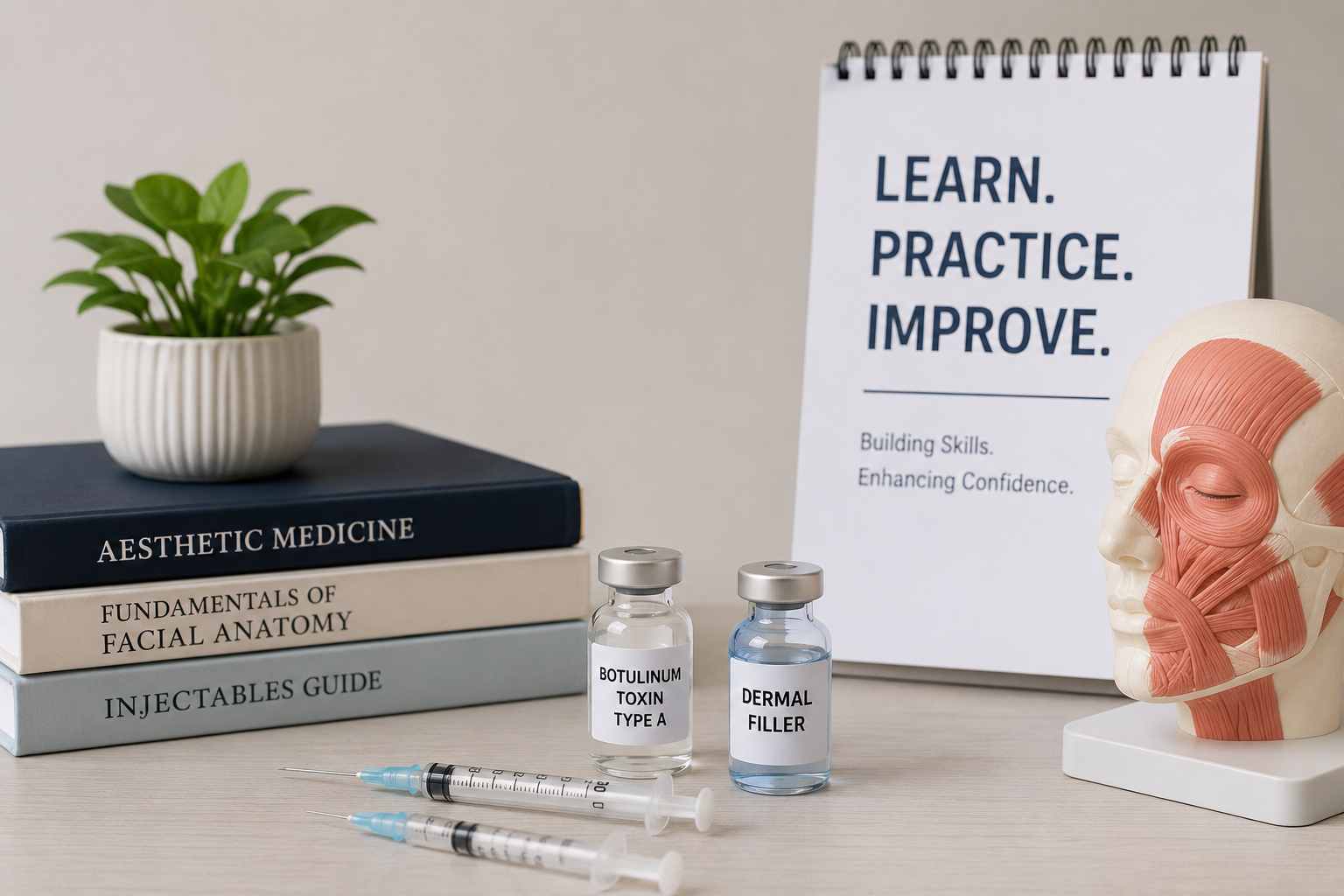
Doctors learn Botox and dermal fillers through a combination of medical education, specialized aesthetic medicine courses, hands-on training, facial anatomy workshops, supervised clinical practice, and continuous professional development. While certification courses introduce the fundamentals, becoming a confident injector requires practical experience, mentorship, and ongoing learning.
Elegance Vidhyalay is a leading institute for aesthetic medicine education, offering structured training programs designed for qualified healthcare professionals. Our courses combine scientific knowledge, hands-on practical sessions, and mentorship to help doctors build confidence in performing safe and effective aesthetic procedures.
Botox and dermal fillers are among the most commonly performed non-surgical aesthetic procedures worldwide. While they may appear straightforward, every injection requires precision, detailed anatomical knowledge, and sound clinical judgment.
Proper training helps doctors:
For this reason, learning Botox and fillers goes far beyond attending a short certification course.
Eligibility depends on the regulations of each country. In many regions, aesthetic medicine training is intended for licensed healthcare professionals.
Depending on local guidelines, eligible participants may include:
Applicants should always verify the eligibility requirements applicable in their region.
The journey begins with a strong medical foundation.
Before performing injectable treatments, doctors study:
Understanding these subjects helps doctors make informed clinical decisions and perform procedures more safely.
A structured aesthetic medicine course typically covers both theory and practical skills.
Common learning areas include:
Understanding muscles, fat compartments, ligaments, arteries, veins, nerves, and facial ageing patterns.
Learning how to evaluate facial proportions, identify treatment goals, and determine patient suitability.
Recognizing and managing potential complications while following safe clinical protocols.
Reading textbooks or watching demonstrations cannot replace practical experience.
Hands-on training allows doctors to learn:
Practical sessions under expert supervision help bridge the gap between theoretical knowledge and real clinical practice.
Certification is only the beginning.
Many doctors continue improving their skills through:
Experience gained over time plays a major role in developing confidence and clinical judgment.
There is no fixed timeline.
An introductory certification course may take a few days, but developing advanced skills generally requires months or years of practice.
Experienced aesthetic practitioners continue learning throughout their careers as new products, technologies, and techniques become available.
Successful aesthetic practice requires much more than technical injection skills.
Doctors also develop expertise in:
The combination of science, clinical experience, and aesthetic understanding helps deliver consistent patient outcomes.
Aesthetic medicine continues to evolve with new research, products, and injection techniques.
Experienced practitioners regularly participate in:
Continuous education helps doctors refine their skills and stay aligned with current best practices.
A well-designed aesthetic medicine course provides more than certification.
It helps participants:
The quality of training often influences both practitioner confidence and patient outcomes.
At Elegance Vidhyalay, we believe that quality education combines scientific knowledge with practical experience. Our training programs are designed to help qualified healthcare professionals build confidence in aesthetic procedures through structured learning, hands-on sessions, and mentorship from experienced faculty.
Whether you are beginning your journey in aesthetic medicine or looking to enhance your existing skills, our courses are designed to support your professional growth.
Explore Our Courses:
👉 https://elegancevidhyalay.in/crash-courses/
Contact Our Training Team:
👉 https://elegancevidhyalay.in/contact-us/
Under the expert guidance of Dr. Ashutosh Shah, an experienced cosmetic surgeon and aesthetic trainer, healthcare professionals gain practical knowledge, advanced injection techniques, and the confidence to perform aesthetic procedures safely and ethically. Structured, evidence-based training combined with real clinical exposure helps participants build the skills needed for successful aesthetic practice.
Eligibility depends on local regulations. Many aesthetic medicine programs are designed for licensed healthcare professionals who meet the required qualifications.
Certification provides the foundation, but practical experience, mentorship, and continued education are equally important for developing advanced skills.
Introductory courses may last a few days, while achieving proficiency usually requires ongoing practice and continuous professional development.
Botox and filler injections are performed close to important muscles, nerves, and blood vessels. A detailed understanding of facial anatomy helps improve treatment planning, safety, and aesthetic outcomes.
Yes. Practical training under experienced mentors allows doctors to apply theoretical knowledge, improve injection techniques, and build confidence in clinical practice.