A FUE technique hair transplant course India teaches you to harvest and place hair grafts one by one, without a strip scar. At Elegance Vidhyalay in Surat, we train you on this exact skill through live patient work under Dr. Ashutosh Shah, who brings over 22 years of surgical experience. Because follicular unit extraction is now the most requested method, doctors and technicians who master it early find steady work and strong demand. So this guide explains what the course covers, who can join, and how hands on practice turns theory into real ability.
Many people learn the theory of FUE from videos, yet freeze the moment they hold a punch. Therefore our focus stays practical. You watch, you assist, and then you perform under close supervision. That progression builds confidence fast, and it protects patients while you learn.
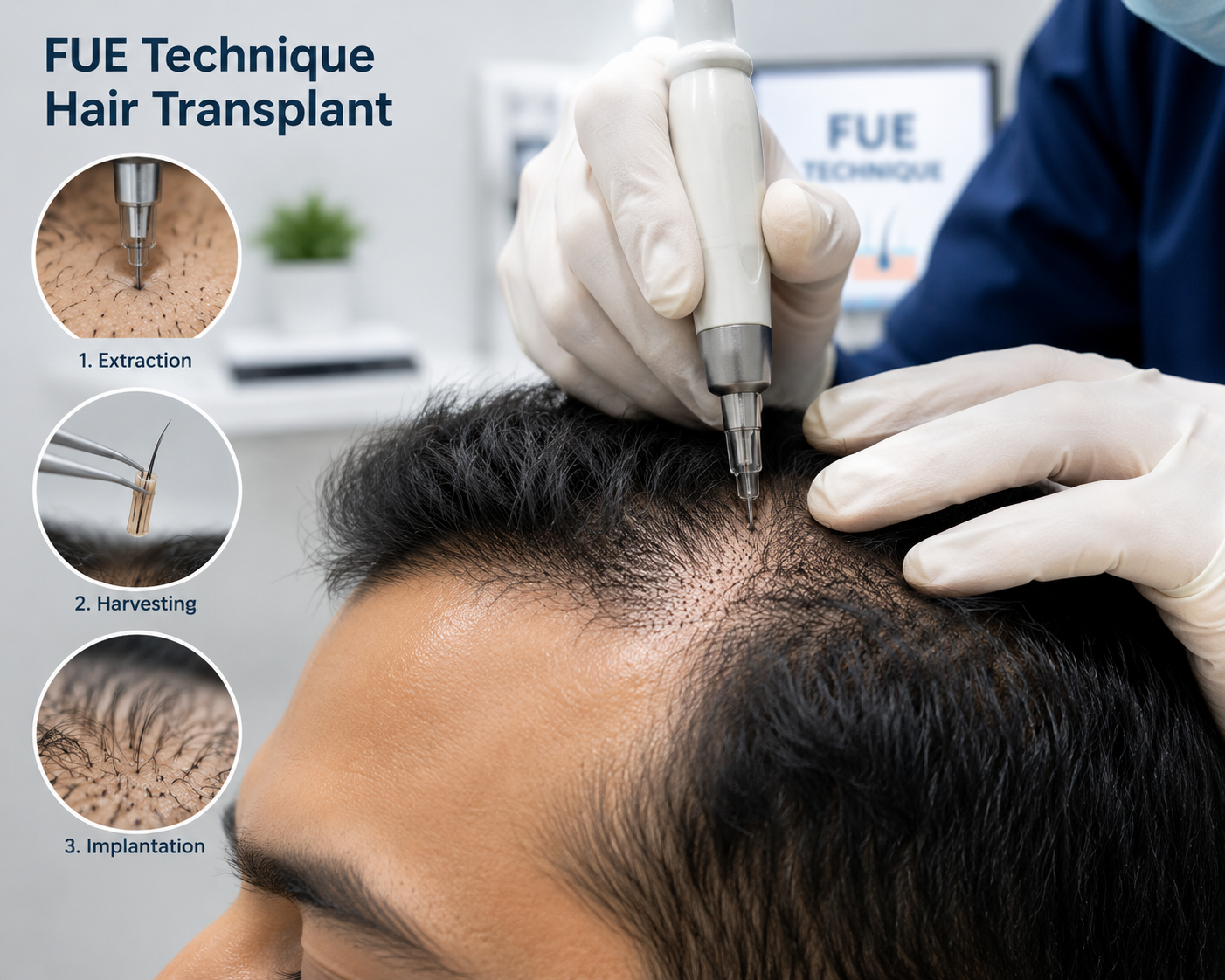
A FUE technique hair transplant course India is structured training that teaches follicular unit extraction, the scarless method of moving hair grafts from a donor area to thinning zones. You learn to extract single follicular units, keep them healthy, and implant them at natural angles for a realistic result.
FUE has largely replaced older strip surgery for one clear reason. It leaves no linear scar, so patients can keep short hair without worry. Moreover, recovery feels easier and downtime stays short. Because of these benefits, most modern clinics now offer FUE as their main service. Our hair transplant and nonsurgical hair loss workshop covers FUE alongside FUT, DHI, PRP and GFC, so you understand where each method fits.
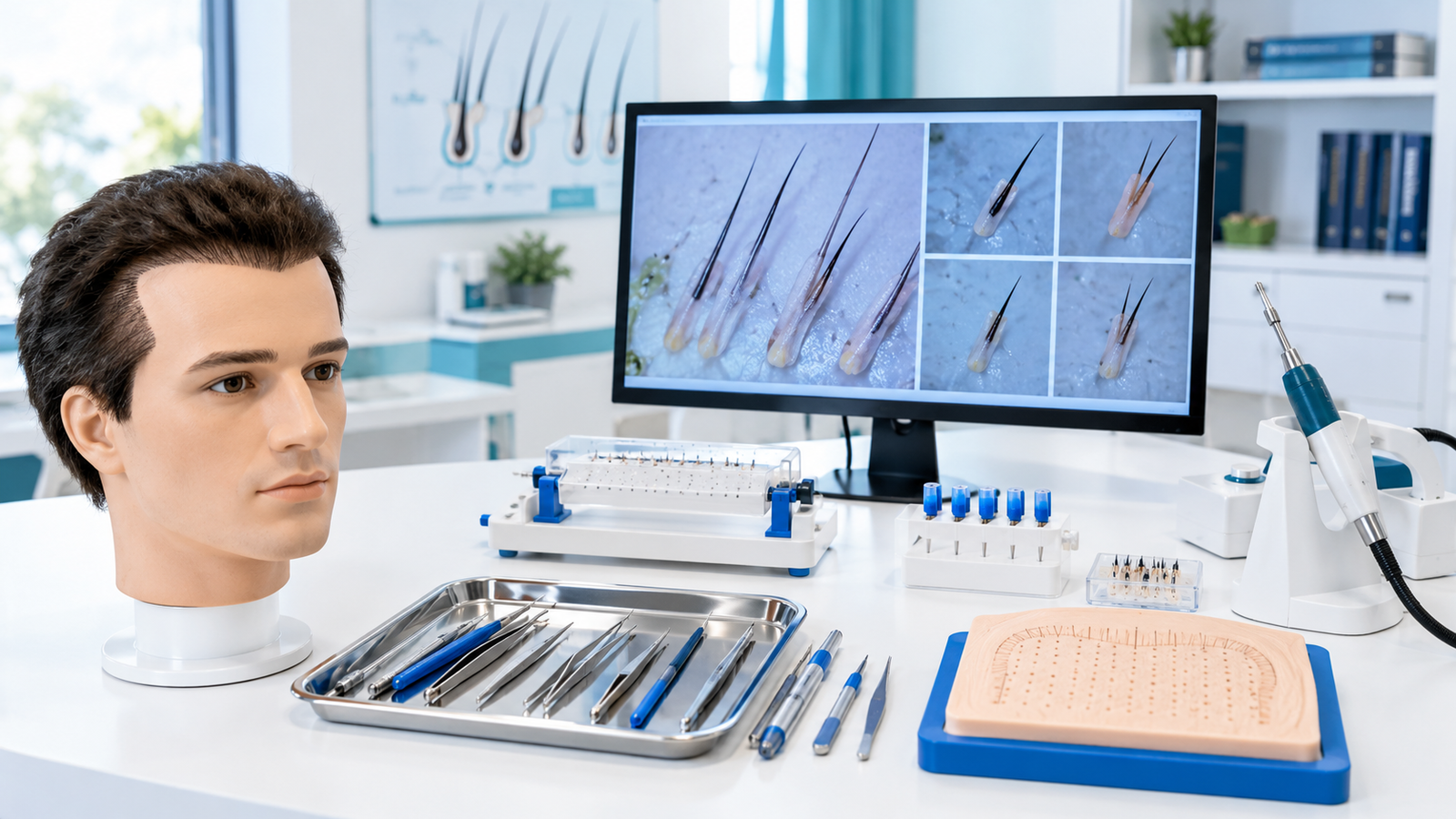
The course covers the full FUE workflow, from patient assessment to the final implanted graft. First you study scalp anatomy and hairline design. Then you practice donor extraction, graft handling, slit making and implantation. Finally you learn aftercare and how to avoid common mistakes that harm graft survival.
In practice, a strong FUE program moves through clear stages. Consider the main areas we train:
Because each stage builds on the last, you finish with a full mental map of a real case. That structure matters more than memorizing isolated facts. You can explore our wider crash courses and workshops to see how FUE connects with other cosmetic skills.
Both doctors and paramedical professionals can join, though roles differ. MBBS doctors, dermatologists and surgeons can learn to perform full procedures. Meanwhile technicians and assistants train to support extraction, graft handling and implantation. So the field welcomes several backgrounds, not just one.
For doctors, FUE adds a high demand service to an existing practice. For 12th pass students and paramedical aspirants, it opens a technician career with real growth. Our hair transplant technician course prepares support staff who clinics genuinely need. Because clinics run as teams, skilled technicians remain just as valuable as surgeons.
That said, motivation matters as much as background. Hair transplant work asks for patience, steady hands and long focus. Therefore we look for learners who care about detail, since graft survival depends on gentle, precise handling.
Hands on FUE training matters because extraction is a physical skill, not a fact you memorize. You must feel the punch depth, judge the angle, and lift each graft without crushing it. Only live practice under a mentor builds that muscle memory, so patients get safe, natural results.
Online lectures explain the idea well, yet they cannot train your hands. A trainee who has never held a micromotor will struggle on a real scalp. In contrast, supervised practice lets you make small mistakes safely, then correct them at once. As a result, you leave the course ready to work, not just ready to talk.
At Elegance Vidhyalay we teach on live patients under direct observation. You perform each step while an expert watches and guides you. Because Dr. Ashutosh Shah personally mentors trainees, you learn judgment that no textbook carries. You can read more about Dr. Ashutosh Shah and his surgical background.
FUE skills can lead to clinic employment, independent practice or a full clinic setup. Trained surgeons often earn strong fees per case, while technicians build stable, well paid roles. Because demand keeps rising and skilled people stay scarce, good FUE training tends to pay back quickly.
India has become a major destination for affordable hair restoration. Patients travel from smaller towns and even from abroad for treatment. Consequently, clinics keep opening in tier 2 and tier 3 cities, and they all need trained hands. So the career scope reaches well beyond the metros.
Still, income depends on real ability, not just a certificate. Clinics value people who can deliver clean grafts and natural hairlines. Therefore practical FUE training becomes an investment in earning power, since skill is what patients and employers actually pay for.
Pick an institute that offers live patient practice, expert mentorship and a clear, complete curriculum. Ask how many cases you will personally work on. Confirm who teaches you and check their surgical experience. Because these factors shape your real skill, they matter far more than glossy brochures.
Before you enroll, weigh a few practical points:
Elegance Vidhyalay was built around these exact standards. We keep groups small, teach on real patients, and mentor every learner closely. If you want honest guidance on the right path, simply contact our admissions team and we will help you plan.
FUE, or follicular unit extraction, removes hair grafts one by one from a donor area using a small punch. It leaves no linear scar, heals quickly, and gives natural results. Most modern clinics now prefer FUE over older strip methods.
Course length varies by depth and format, from short intensive workshops of a few days to longer structured programs. Elegance Vidhyalay focuses on hands on practice, so you spend most of your time performing real steps rather than only listening to lectures.
Yes, MBBS doctors can learn FUE and perform procedures after proper training. Many general practitioners add hair transplant as a growing service. With supervised live practice, doctors gain the confidence to run cases safely and independently over time.
No prior transplant experience is required to begin. We teach fundamentals step by step, starting with anatomy and simple handling. However, steady hands, patience and genuine interest help you learn the physical skills of extraction and implantation faster.
FUE suits patients who want no linear scar and shorter recovery, while FUT can yield many grafts in one session. Neither method wins every time. A trained professional chooses the right technique based on each patient’s donor area and goals.
Yes, live patient practice sits at the heart of our training. You perform extraction and implantation under close expert supervision. This real exposure builds the muscle memory and judgment that videos and demonstrations alone simply cannot provide.
Yes, technicians and paramedical aspirants can train for support roles in FUE procedures. Clinics rely on skilled technicians for graft handling and implantation. Our dedicated technician track prepares this exact team, which clinics across India actively seek.
Elegance Vidhyalay conducts its FUE technique hair transplant training in Surat, Gujarat. You learn in a working clinical setting with live cases and modern equipment, guided directly by Dr. Ashutosh Shah and his experienced faculty.
If you want to master follicular unit extraction with real cases and expert mentorship, we are ready to help. Elegance Vidhyalay trains you on live patients, in a small group, under a surgeon with decades of experience. So take the first step toward a confident, in demand career. Contact us today to check dates, eligibility and the next available batch.
Elegance Vidhyalay is a medical education and professional training institute in Surat, founded by Dr. Ashutosh Shah under Elegance Clinic. We offer fellowships, crash courses, certified cosmetic courses and paramedical courses in cosmetic and reconstructive medicine. Our training stays hands on, with the latest equipment and live patient exposure under Dr. Shah’s direct observation. Because we believe skill is built by doing, we place practical practice at the centre of every program, so our learners leave truly ready to work.