Hair transplant procedures are becoming increasingly popular in India. Because of this growing demand, many doctors now want proper practical training before offering hair restoration treatments to patients. However, learning only theory is often not enough. Surgeons today need real clinical exposure, practical guidance, and hands on understanding.
That is why FUE hair transplant training has become an important part of modern aesthetic medical education. Doctors want to understand not only the technical process, but also patient planning, graft handling, hairline design, and long term treatment outcomes.
At Elegance Vidhyalay, the focus remains on practical learning with real clinical understanding under the guidance of Dr. Ashutosh Shah.
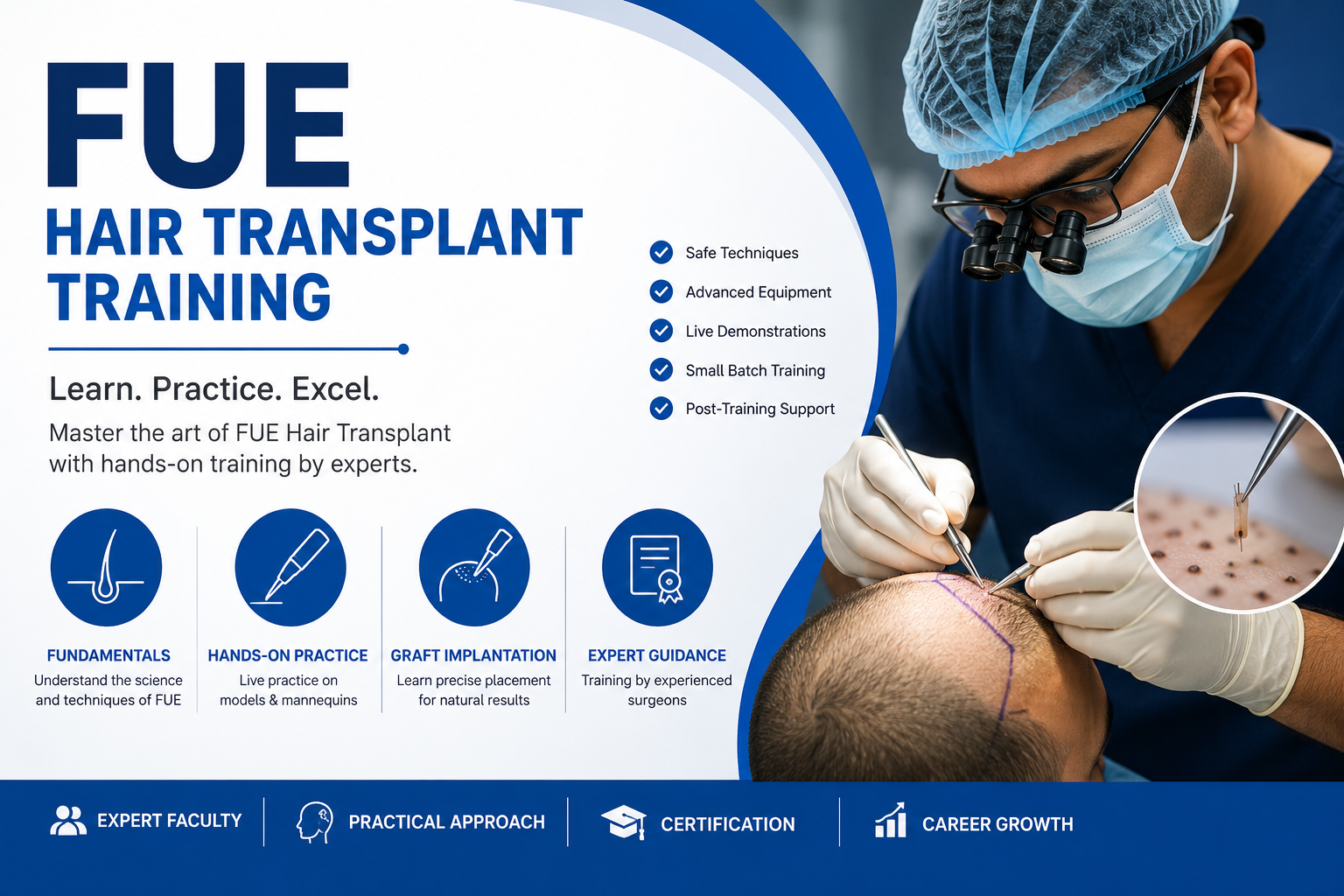
FUE hair transplant training is an advanced educational program designed to teach doctors the principles and practical techniques of Follicular Unit Extraction hair restoration procedures.
The training usually includes:
• Hairline assessment
• Donor area evaluation
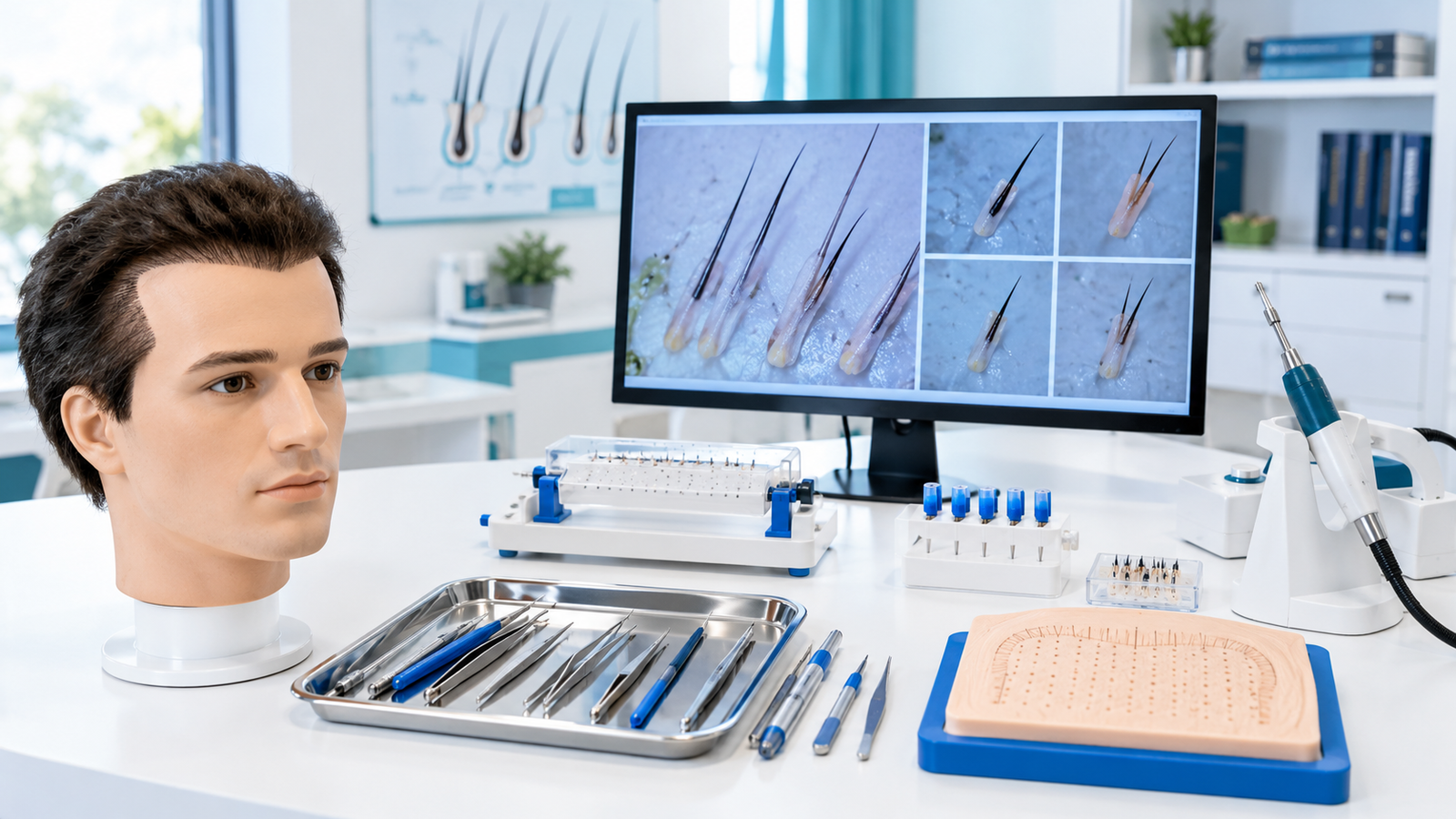
• Graft extraction techniques
• Graft implantation methods
• Patient consultation
• Hair transplant planning
• Investigation for hair loss
• Post procedure care
The goal is to help doctors gain confidence and practical understanding before treating patients independently.
Many doctors initially feel nervous while performing hair restoration procedures. Hair transplant surgery requires precision, patience, and proper planning. Even small mistakes can affect final results.
A structured hair transplant training program helps doctors:
Hands on exposure helps surgeons become more comfortable during procedures.
Natural hairline planning is one of the most important skills in hair restoration.
Not every patient is suitable for immediate surgery. Therefore, proper evaluation becomes essential.
Doctors must first identify the cause of hair fall before recommending treatment.
Proper graft management supports better survival and natural results.
Before planning any hair restoration procedure, understanding the reason behind hair fall is very important.
Investigation for hair loss may include:
• Scalp evaluation
• Medical history assessment
• Hair density analysis
• Lifestyle discussion
• Hormonal evaluation in selected cases
• Nutritional assessment
At Elegance Vidhyalay, trainees learn the importance of proper patient evaluation before planning hair transplant procedures.
This training may be suitable for:
• Plastic surgeons
• Dermatologists
• Cosmetic physicians
• Doctors interested in hair restoration
• Medical professionals seeking aesthetic practice expansion
The program is especially useful for doctors who want practical exposure and real clinical learning.
A good hair transplant fellowship or training course should go beyond theory.
Doctors learn how to understand patient expectations realistically.
Natural hairline design is important for long term patient satisfaction.
Understanding safe extraction techniques helps preserve donor density.
Correct angle and placement improve natural appearance.
Doctors also learn recovery guidance and complication management.
Proper diagnosis helps avoid poor treatment planning.
Many doctors today want structured aesthetic training programs because they improve both confidence and clinical skills.
Learning through actual patient cases improves understanding.
Doctors gradually improve decision making ability.
Practical exposure helps doctors manage patient expectations effectively.
Hair restoration is a rapidly growing field in aesthetic medicine.
Doctors learn both practical and scientific aspects of treatment.
Choosing the right institute matters because practical exposure plays a major role in surgical confidence.
At Elegance Vidhyalay, trainees learn through practical observation and guided exposure.
Dr. Ashutosh Shah shares real clinical insights and practical treatment planning methods.
Surat has become an important healthcare and aesthetic treatment destination, giving trainees valuable exposure to diverse patient cases.
The training emphasises realistic planning and natural hair restoration outcomes.
Some doctors believe short workshops alone can make them experts immediately. However, hair restoration requires continuous learning and repeated practice.
A structured hair transplant course helps doctors:
• Build stronger fundamentals
• Understand patient safety
• Improve planning skills
• Learn practical complication management
• Develop confidence gradually
At Elegance Vidhyalay, the focus remains on long term professional growth.
One of the most common questions doctors ask is about training cost.
The overall cost may depend on:
• Course duration
• Clinical exposure level
• Live case involvement
• Mentorship structure
• Academic support
Many doctors consider advanced hair transplant training an investment in future career development.
Practical clinical exposure is very important for surgical confidence.
Hair restoration requires patience, precision, and repeated practice.
Proper investigation for hair loss is necessary before treatment planning.
Different qualified medical professionals may pursue training depending on regulations and background.
After structured FUE hair transplant training, many doctors notice improvement in:
• Clinical confidence
• Patient consultation
• Hairline planning
• Graft handling
• Treatment decision making
• Understanding of investigation for hair loss
These improvements often help doctors provide safer and more practical patient care.
Doctors who complete hair transplant training may explore opportunities in:
• Hair transplant clinics
• Cosmetic centres
• Multi specialty hospitals
• Aesthetic practice setups
• Advanced hair restoration centres
As hair restoration demand grows in India, trained professionals are increasingly valued.
FUE hair transplant training is becoming an important educational step for doctors interested in aesthetic medicine and hair restoration. However, proper training should focus not only on theory, but also on practical understanding, patient safety, and natural treatment planning.
At Elegance Vidhyalay, doctors receive practical learning exposure under the guidance of Dr. Ashutosh Shah. The hair transplant training program focuses on real world clinical understanding, investigation for hair loss, and natural hair restoration principles.
For doctors seeking hands on learning and practical confidence, choosing the right training institute can make a meaningful difference in professional growth.
FUE hair transplant training is a practical educational program that teaches doctors hair restoration techniques and patient management.
Plastic surgeons, dermatologists, cosmetic physicians, and qualified medical professionals may join depending on eligibility.
Training improves practical confidence, although continuous learning and experience remain important.
Elegance Vidhyalay offers practical exposure, clinical understanding, and mentorship by Dr. Ashutosh Shah.