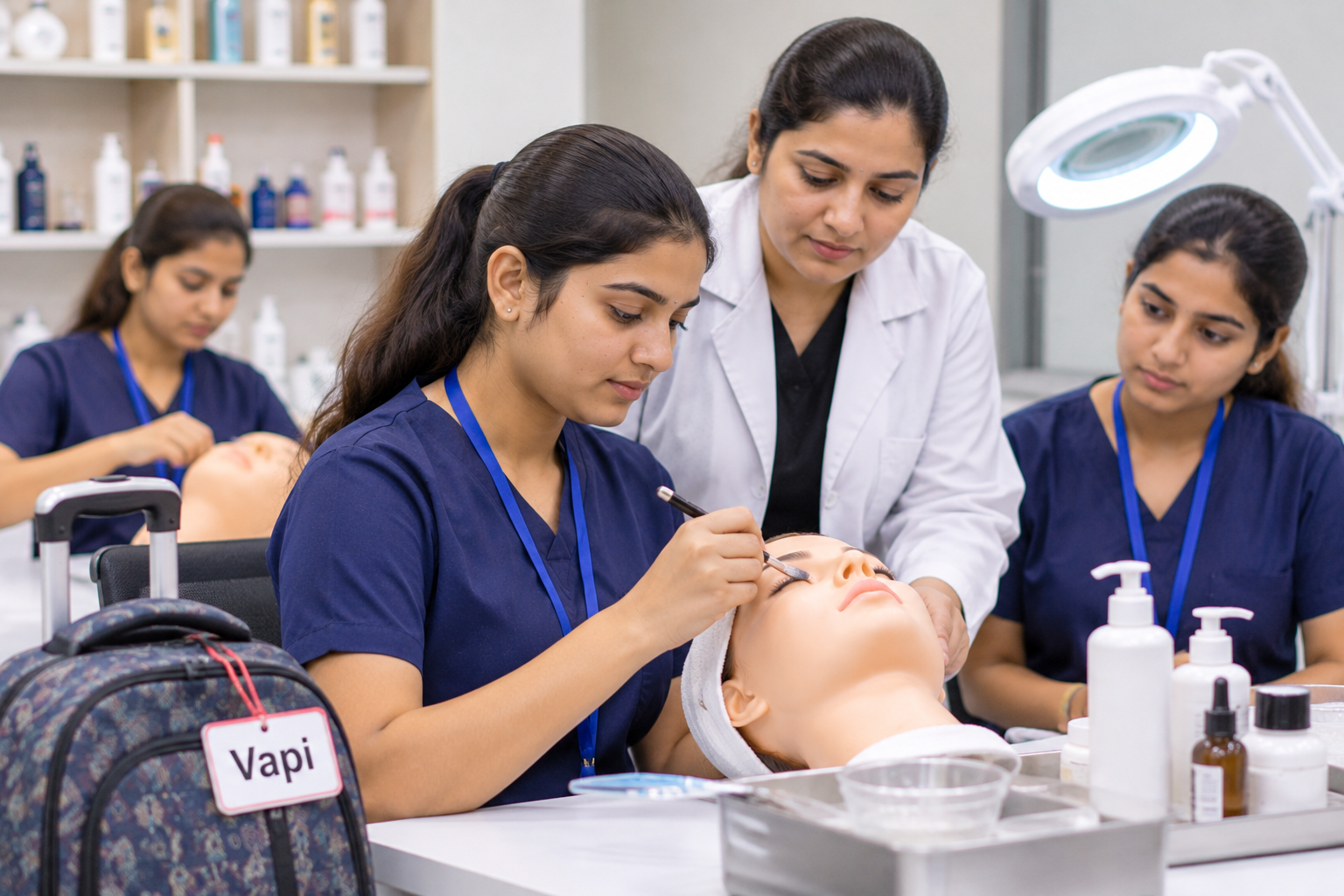
Cosmetology course for students from Vapi about cosmetology training in Surat that combines classroom teaching with supervised hands-on practice. Before enrolling, compare practical training hours, certificate details, eligibility requirements and available support for travel or accommodation.
A cosmetology course helps students develop knowledge of beauty treatments, skincare, haircare, hygiene, product selection and client communication. The programme may include classroom lessons, instructor demonstrations and supervised practical exercises.
At Elegance Vidhyalay, associated with Dr. Ashutosh Shah, a Plastic, Reconstructive and Cosmetic Surgeon, prospective students can enquire about available cosmetology training programmes and admission requirements.
Students travelling for education should understand the course structure, class timings, fees and accommodation arrangements before confirming admission.
A cosmetology course may combine theoretical knowledge with practical training in beauty and personal care.
The exact syllabus depends on the approved curriculum, training facilities and course level.
Students may learn about basic skin structure, common skin types, hair characteristics and general personal care principles.
These topics help students understand why different products and techniques suit different needs.
Maintaining hygiene is essential when providing beauty services.
Training may introduce hand hygiene, cleaning procedures, equipment maintenance and basic infection-prevention practices.
Students should also learn when to avoid a treatment and recommend an appropriate professional consultation.
Cosmetology students may study cleansers, moisturisers, masks, haircare products and other commonly used cosmetic preparations.
Training can explain product selection, safe storage, expiry dates and the importance of following manufacturer instructions.
Depending on the syllabus, practical sessions may cover basic facial preparation, cleansing, massage techniques and non-invasive beauty services.
Instructors should demonstrate techniques before students practise them under supervision.
Students may learn how to discuss client preferences, identify general concerns and maintain accurate service records.
Professional communication also includes respecting privacy and explaining the limitations of cosmetic services.
Practical sessions may involve mannequin-based exercises, instructor demonstrations and supervised practice with consenting participants.
Students must follow hygiene protocols and remain within their training and professional scope.
Eligibility depends on the programme’s level, learning objectives and admission policy.
Some introductory beauty courses may accept students after school education, while specialised programmes may require additional qualifications.
Students who meet the minimum educational requirements may apply for cosmetology training.
However, the institute must confirm whether it accepts candidates after the 10th, 12th or another qualification.
College students and graduates interested in beauty and skincare may explore cosmetology education as an additional skill-development opportunity.
Applicants should check whether the programme requires previous training or experience.
People already working in beauty services may consider additional training to improve their knowledge and practical techniques.
However, employment experience does not automatically replace the programme’s eligibility requirements.
Individuals considering a career change may also enquire about cosmetology education.
They should evaluate the time commitment, course expenses and professional opportunities before enrolling.
Applicants may need:
Students should understand that cosmetology training does not automatically qualify them to perform medical or invasive aesthetic procedures.
The duration of a cosmetology programme depends on the number of modules, classroom sessions and supervised practical hours.
Students should request a complete timetable before paying the admission fee.
Theory sessions may explain hygiene, product knowledge, skin and hair fundamentals and client communication.
Practical sessions allow students to observe demonstrations and practise selected techniques under instructor supervision.
The course coordinator should provide the exact allocation of teaching hours.
Practical learning helps students develop confidence with products, equipment and basic techniques.
Students should ask how much time they will spend watching demonstrations, practising independently on training models and receiving feedback.
A programme’s total duration alone does not reveal the quality of practical education.
The institute may evaluate students through written questions, practical demonstrations or instructor assessments.
Applicants should confirm the approved assessment process and minimum attendance requirements.
Cosmetology course fees depend on the programme’s duration, teaching resources, practical facilities and certification arrangements.
Before enrolling, students should request a written breakdown of all charges.
Depending on the approved programme, fees may include:
However, students should not assume that every item is included.
Some programmes may charge separately for registration, training kits, cosmetic products, examinations or certificates.
Students should also consider transport, meals and accommodation when calculating their total education budget.
Instalment arrangements depend on the institute’s current payment policy.
Applicants should request written payment and cancellation conditions before transferring money.
Students should compare practical hours, instructor qualifications, syllabus coverage, training equipment and certificate details.
The lowest fee does not always represent the most suitable learning experience.
For additional guidance, read what is the fee for cosmetology course in surat.
Students travelling for a cosmetology course for students from vapi should plan their journey around the confirmed class schedule.
Travel arrangements become particularly important when the programme includes consecutive practical sessions or early reporting times.
Before travelling, confirm the institute’s training address, reporting time and class location.
Students should also ask whether theory and practical sessions take place at the same venue.
Daily travel may suit some students, while others may prefer temporary accommodation during intensive training.
The appropriate option depends on class timings, travel duration, personal commitments and budget.
Students should compare these factors before making arrangements.
Students may need information about nearby accommodation options.
However, the institute must confirm whether it provides hostel or paying-guest guidance.
Avoid making non-refundable accommodation bookings until the institute confirms admission and batch dates.
A cosmetology course weekend batch may appeal to students who work or study during weekdays.
However, the institute must confirm whether weekend classes are currently available.
Students should also check whether weekend batches include the same practical training and assessment requirements as regular batches.
A pre-admission visit may help students understand the training environment.
During the visit, ask about faculty supervision, classroom facilities, practical equipment and the approved syllabus.
Completing a cosmetology course may help students develop skills relevant to beauty and personal care services.
However, career opportunities depend on training quality, qualifications, practical competence and employer requirements.
Eligible graduates may consider entry-level opportunities in salons, beauty studios or other personal care businesses.
Employers may require additional experience or qualifications for specific services.
Training may improve students’ understanding of hygiene, product selection, basic facial techniques and client communication.
Continued practice and professional feedback can support further skill development.
Students interested in specialised cosmetology subjects may explore additional recognised courses.
They should verify eligibility, practical requirements and certificate recognition before enrolling.
A cosmetology certificate does not automatically authorise graduates to diagnose medical conditions, prescribe medication or perform invasive aesthetic procedures.
Students must follow applicable professional requirements and work within their authorised scope.
Beauty professionals benefit from clear client communication, appointment management, hygiene practices and accurate service documentation.
Students interested in self-employment should also understand applicable business and licensing requirements.
Cosmetology products, techniques and safety guidance can change over time.
Graduates should continue learning through reliable educational resources, practical experience and appropriately qualified trainers.
Weekend batch availability depends on the institute’s current academic schedule. Students should contact Elegance Vidhyalay to confirm upcoming dates, class timings and practical training requirements. Before enrolling, ask whether weekend participants complete the same approved syllabus, supervised exercises and assessments as students attending regular weekday batches.
Accommodation assistance has not yet been confirmed. Students considering a cosmetology course for students from vapi should ask the admissions team whether hostel or PG guidance is available. They should also compare travel costs, class timings, accommodation expenses and the training venue before booking their stay.
The total practical training hours depend on the approved curriculum. Applicants should ask how much time the institute allocates to instructor demonstrations, mannequin-based exercises, supervised student practice and final skills assessment before completing admission.
Prospective students can request a pre-admission visit, subject to the institute’s availability and permission. Contact the admissions team before travelling to arrange an appointment. During the visit, ask about classrooms, training equipment, faculty qualifications, practical supervision, course fees and certificate details.
Applicants should contact Elegance Vidhyalay to verify the application deadline, available seats, eligibility requirements and daily timetable. Students should wait for written admission confirmation before making non-refundable travel or accommodation arrangements.
A cosmetology course can help eligible students develop foundational knowledge of skincare, haircare, hygiene, beauty techniques and client communication.
Before enrolling, students should compare the approved syllabus, practical hours, duration, fees, certificate details and batch schedule.
Students travelling for training should also plan accommodation and transport according to the confirmed timetable.
At Elegance Vidhyalay, prospective applicants can enquire about available programmes and clarify their training requirements.
For updated admission details, contact us.