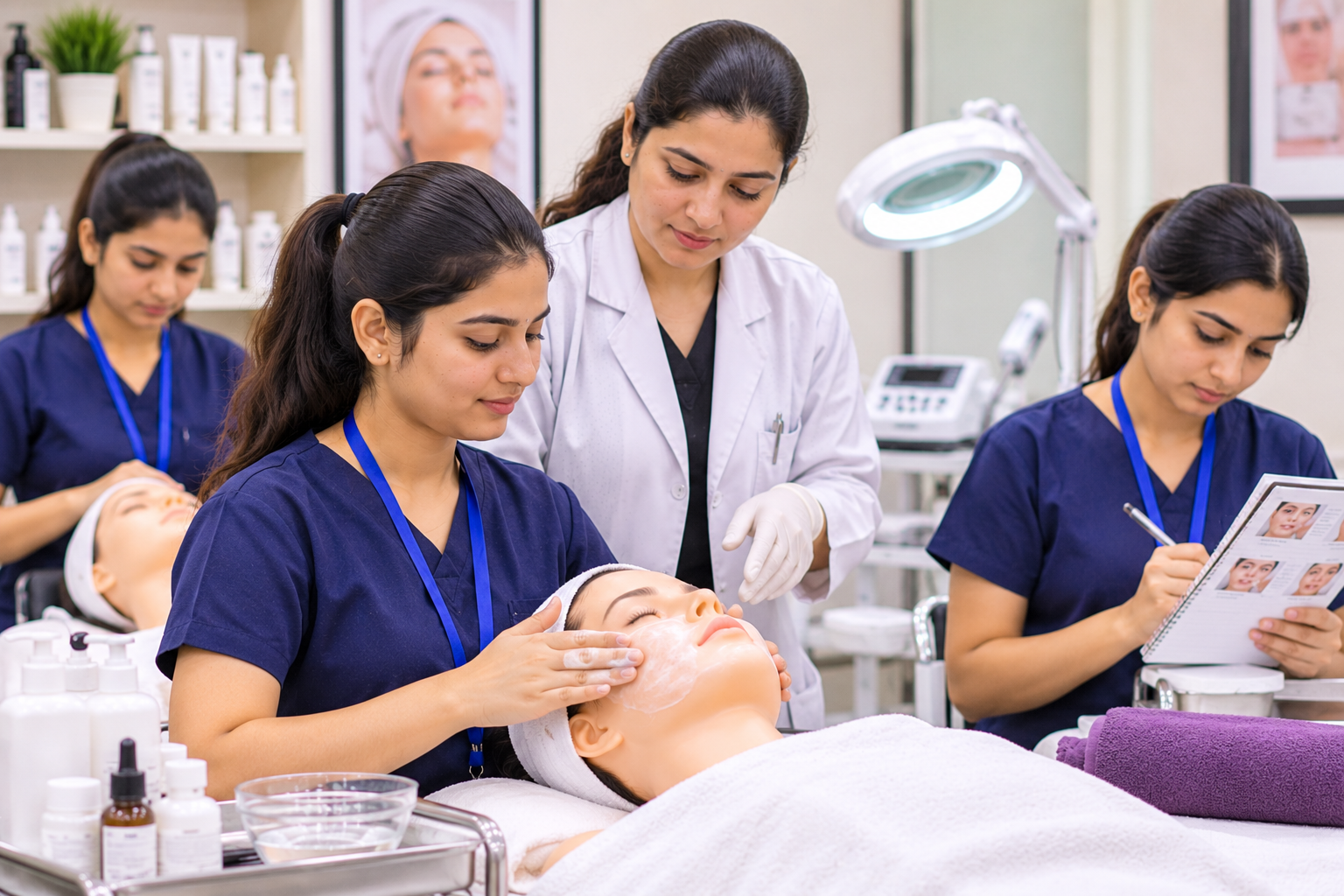
Jobs after cosmetology course completion may include beauty therapist, skincare assistant, cosmetology assistant, beauty consultant and salon coordinator positions. Graduates may work in beauty salons, skincare studios, aesthetic centres or suitable healthcare support settings, depending on their qualifications. Starting salaries vary by employer, experience and practical skills.
A cosmetology course introduces students to skincare, haircare, hygiene, cosmetic products and client communication. However, completing a course does not automatically guarantee employment or authorise medical procedures.
At Elegance Vidhyalay, associated with Dr. Ashutosh Shah, a Plastic, Reconstructive and Cosmetic Surgeon, students can enquire about cosmetology training and career-related guidance.
Understanding possible job roles, employer expectations and career development opportunities helps students make informed decisions before enrolling.
The available jobs after cosmetology course completion depend on the approved syllabus, practical training, certificate and employer requirements.
Different workplaces expect different technical and communication skills.
Beauty therapists provide suitable non-medical beauty and personal care services within their training and professional scope.
Their responsibilities may include basic facial care, product application, hygiene maintenance and client communication.
Employers may require additional practical experience for specialised services.
Skincare assistants may support routine skincare services in beauty studios or appropriate aesthetic settings.
Their responsibilities can include preparing products, organising workstations, maintaining cleanliness and assisting qualified professionals.
They must not diagnose skin diseases or independently perform medical treatments.
A cosmetology assistant may help experienced professionals organise equipment, prepare treatment areas and maintain service records.
The exact responsibilities depend on the workplace and the employee’s qualifications.
Beauty consultants help customers understand cosmetic product categories and select suitable non-prescription beauty products.
This role requires product knowledge, communication skills and an understanding of safe product use.
Salon coordinators manage appointments, customer communication, inventory and routine administrative activities.
Students interested in management may find this role relevant, especially if they develop organisational and customer service skills.
| Job Role | Work Setting | Skills Needed | Next Career Step |
|---|---|---|---|
| Beauty therapist | Salon or spa | Skincare, hygiene, client care | Senior beauty therapist |
| Skincare assistant | Skincare studio | Product knowledge, preparation | Advanced skincare training |
| Cosmetology assistant | Aesthetic centre | Equipment preparation, documentation | Specialised relevant training |
| Beauty consultant | Beauty retail or studio | Product knowledge, communication | Senior consultant |
| Salon coordinator | Beauty business | Scheduling, customer service | Salon manager |
The cosmetology course career scope depends on the student’s qualifications, practical experience and the type of services an employer provides.
Salons and spas may recruit eligible candidates for beauty therapy, skincare assistance and customer service roles.
Employers often assess hygiene knowledge, client handling and practical demonstrations.
Skincare studios may offer opportunities involving non-invasive beauty services, product preparation and consultation support.
Employees must follow workplace protocols and avoid activities outside their qualifications.
Some aesthetic centres employ support staff for appointment coordination, preparation, inventory and documentation.
However, a cosmetology certificate does not authorise independent medical aesthetic procedures.
Certain healthcare organisations may offer non-clinical or appropriately supervised support positions.
Such roles depend on employer requirements and recognised qualifications. A cosmetology course alone does not qualify someone to work as a nurse, operating theatre technician or medical practitioner.
Cosmetic retailers and product companies may recruit candidates for customer education, product demonstrations and sales support.
These roles often require strong product knowledge and communication skills.
Students should compare different workplaces before deciding which career path suits their interests.
The cosmetology course salary varies according to the employer, location, job responsibilities, experience and practical competence.
There is no single starting salary that applies to every cosmetology graduate.
Employers may value candidates who can demonstrate safe product handling, hygiene, client consultation and appropriate beauty techniques.
Supervised practical training helps students develop these skills.
Candidates with relevant work experience may qualify for positions requiring less introductory supervision.
However, experience alone does not replace mandatory qualifications.
Salary structures may differ between salons, beauty studios, retail businesses and aesthetic centres.
Applicants should compare the job description, working hours, benefits and responsibilities.
Clear communication can improve customer satisfaction and teamwork.
Employers may value candidates who explain services accurately, maintain confidentiality and respond professionally to customer concerns.
Relevant advanced education may help candidates develop specialised non-medical beauty skills.
Students should verify the recognition, practical content and professional scope of any additional course.
Before enrolling, students should consider the course fee alongside practical hours, teaching quality and realistic employment opportunities.
For further information, read what is the fee for cosmetology course in surat.
Students should not assume that course completion guarantees a particular salary or job.
Students exploring a cosmetology course in anand should focus on practical competence, workplace safety and communication rather than certification alone.
Employers may assess how confidently candidates demonstrate skills and follow instructions.
Beauty professionals should understand hand hygiene, equipment cleaning, workstation preparation and safe product handling.
They should also recognise when a service is inappropriate and requires referral to a qualified healthcare professional.
Candidates should understand common skincare and haircare product categories, manufacturer instructions and basic precautions.
They should avoid making unsupported medical claims about cosmetic products.
Employers may expect staff to listen carefully, discuss client preferences and explain non-medical services accurately.
Respectful communication and privacy protection are important professional skills.
Candidates may need to demonstrate selected techniques relevant to the job.
Supervised practice and instructor feedback can help students improve consistency and confidence.
Beauty workplaces often manage several appointments throughout the day.
Employees should organise their work, prepare supplies and follow appointment schedules without compromising hygiene or safety.
Accurate service records, inventory checks and clear communication support workplace efficiency.
Students should also understand their responsibilities and when to seek guidance from senior staff.
Career growth usually involves continued education, practical experience and professional development.
Students should choose additional training according to their interests and permitted scope of practice.
Entry-level work may help graduates understand client expectations, workplace hygiene and service quality.
Regular feedback from experienced professionals can support skill development.
Graduates may explore additional training in appropriate beauty services, product consultation or salon operations.
Before enrolling, they should verify the course syllabus, practical hours and certificate details.
Strong customer relationships depend on communication, professional behaviour and realistic service expectations.
Employees should avoid promising results that a beauty treatment cannot guarantee.
Experienced professionals may pursue salon coordination, inventory management, staff supervision or other administrative responsibilities.
Business training may help them understand scheduling, budgeting and customer service systems.
Eligible graduates may explore a beauty services business after understanding local licensing, hygiene, taxation and professional requirements.
A cosmetology certificate does not permit someone to independently practise medicine or perform regulated clinical procedures.
Beauty products, technologies and safety recommendations change over time.
Graduates should maintain their skills through credible educational resources and appropriate practical training.
The National Skill Development Corporation (NSDC) provides general information about vocational skills development.
This reference does not establish NSDC recognition or accreditation of any specific Elegance Vidhyalay programme.
Placement support depends on the institute’s current policies and employer connections. Students should ask whether the programme offers career counselling, interview preparation, employer referrals or job-search guidance. Course completion does not guarantee employment, a particular salary or placement with a specific organisation.
Graduates may apply for suitable jobs in other states if they meet employer requirements and applicable regulations. Students considering a cosmetology course in anand should verify the certificate’s relevance, practical training and professional scope. Some employers may require additional experience, recognised qualifications or local compliance before hiring.
International employment depends on the destination country’s immigration rules, professional requirements and employer expectations. A course certificate does not automatically qualify graduates to work overseas. Students should check whether their training meets the relevant standards and whether additional examinations, experience or recognised qualifications are necessary.
Strong practical technique, hygiene knowledge, product expertise, client communication and customer service may improve employment opportunities. However, no individual skill guarantees a salary increase. Candidates should focus on safe, consistent performance, gain relevant experience and pursue recognised additional training when it aligns with their professional goals.
Eligible graduates may consider starting a non-medical beauty services business after meeting applicable registration, licensing and hygiene requirements. They should assess business costs, equipment needs, customer demand and their permitted scope of practice. A cosmetology certificate alone does not authorise medical diagnosis, prescription or invasive aesthetic procedures.
Jobs after cosmetology course completion may include beauty therapy, skincare assistance, product consultation, salon coordination and other suitable support roles.
Career opportunities depend on practical competence, recognised qualifications, experience and employer requirements.
Students should compare training quality, course costs, practical hours and realistic employment options before enrolling.
At Elegance Vidhyalay, prospective applicants can enquire about available cosmetology programmes and career-related information.
For current course details and admission enquiries, contact us.
Choose training that supports your career goals and provides clear information about professional responsibilities.