asfdsaf

What Is the Eligibility for Hair Transplant Training in India?

What Is the Eligibility for Hair Transplant Training in India?

Hair transplantation has become one of the fastest-growing aesthetic procedures in India. As patient demand continues to rise, more doctors are looking to develop practical skills in modern hair restoration techniques. One of the most common questions asked is: “What is the eligibility for hair transplant training in India?”

The answer depends on your medical qualification, professional background, and the type of training program you choose.

In this guide, we’ll explain who can join hair transplant training, what qualifications are usually required, and what you should look for before enrolling.

Who Can Enroll in Hair Transplant Training?

Hair transplant procedures are medical and surgical treatments that require a strong understanding of anatomy, aseptic techniques, local anesthesia, and patient safety.

Most professional training institutes in India accept qualified medical professionals such as:

  • MBBS Doctors
  • MS (General Surgery)
  • MCh Plastic Surgeons
  • Dermatologists (MD/DNB)
  • Cosmetic Surgeons
  • ENT Surgeons
  • Maxillofacial Surgeons
  • Qualified Medical Practitioners interested in aesthetic medicine

Some institutes may also accept postgraduate medical residents or doctors preparing to enter aesthetic practice.

Is MBBS Enough to Learn Hair Transplant?

Yes. Many hair transplant workshops and certification courses are designed specifically for MBBS doctors who want to enter aesthetic practice.

However, training should always include:

  • Hair anatomy
  • Patient selection
  • Hairline design
  • Local anesthesia
  • FUE harvesting
  • Graft handling
  • Implantation techniques
  • Complication management
  • Post-operative care

Practical exposure is just as important as classroom learning.

Can Non-Doctors Join Hair Transplant Training?

Professional surgical hair transplant training is generally intended for qualified medical professionals.

Since hair transplantation involves:

  • Minor surgical procedures
  • Administration of local anesthesia
  • Sterile surgical techniques
  • Medical decision-making

Most reputable institutes restrict complete procedural training to licensed doctors.

Some centers may offer observation programs or technician-focused training separately, but these are different from physician certification courses.

Do You Need Previous Surgical Experience?

Not necessarily.

Many beginners successfully learn hair transplantation if they have:

  • Basic medical knowledge
  • Good hand-eye coordination
  • Interest in aesthetic medicine
  • Willingness to practice under expert supervision

Well-structured programs typically begin with fundamental concepts before moving to advanced techniques.

Skills That Help During Hair Transplant Training

Although not mandatory, these skills can make learning easier:

  • Fine motor skills
  • Patience and attention to detail
  • Understanding of facial aesthetics
  • Interest in cosmetic procedures
  • Ability to communicate with patients
  • Commitment to continuous learning

Hair transplantation combines both surgical precision and artistic planning.

What Should a Good Hair Transplant Training Program Include?

Before enrolling, check whether the course offers:

Comprehensive Theory

Topics should include:

  • Hair biology
  • Causes of hair loss
  • Patient evaluation
  • Hairline planning
  • Medical management of hair loss

Hands-On Surgical Training

Look for practical exposure in:

  • FUE extraction
  • Graft dissection
  • Implantation
  • Instrument handling
  • Sterility protocols
  • Local anesthesia administration
  • Live patient demonstrations

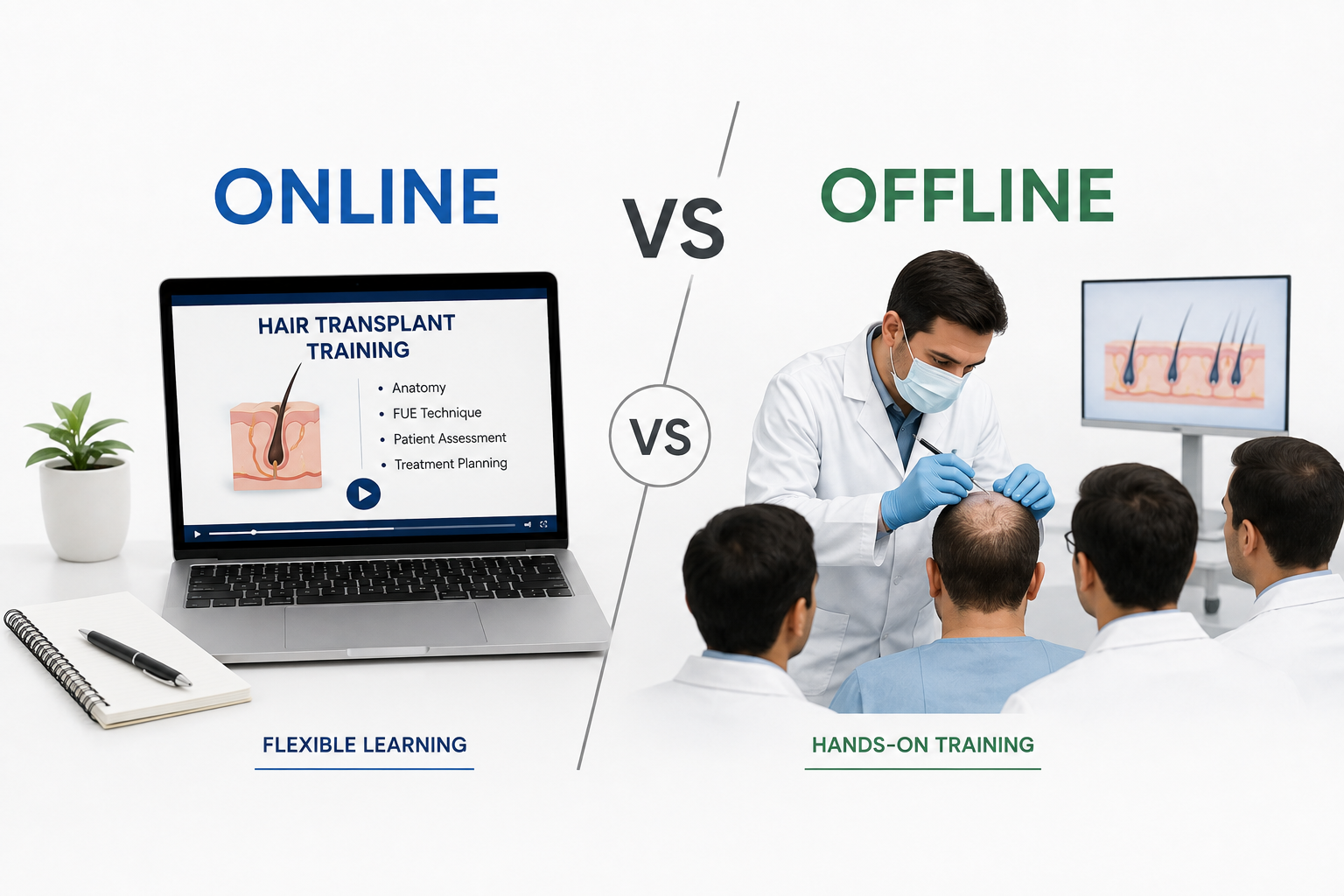
Hands-on experience is one of the most valuable parts of professional training.

Management of Complications

A quality course should teach how to identify and manage:

  • Bleeding
  • Poor graft survival
  • Infection prevention
  • Donor area healing
  • Post-operative swelling
  • Patient counseling

Business and Practice Setup

Some advanced courses also cover:

  • Clinic setup
  • Equipment selection
  • Patient consultation
  • Photography standards
  • Consent documentation
  • Ethical marketing
  • Follow-up protocols

Is Certification Important?

Yes. A certificate demonstrates that you have completed structured training.

However, the true value lies in:

  • Practical experience
  • Faculty guidance
  • Live case exposure
  • Continued mentorship
  • Confidence in performing procedures safely

Certification should complement, not replace, hands-on competence.

How Long Does Hair Transplant Training Take?

Training duration varies depending on the institute and course format.

Programs may range from:

  • One-day workshops
  • Weekend certification courses
  • Intensive multi-day hands-on training
  • Advanced fellowship programs with extended mentorship

Choose a course based on your learning goals and the amount of practical exposure provided.

Why Choose a Hands-On Hair Transplant Course?

Hair transplantation is a skill-based procedure that cannot be mastered through theory alone.

Hands-on training helps doctors:

  • Build surgical confidence
  • Learn proper graft handling
  • Practice FUE techniques
  • Understand patient selection
  • Improve procedural accuracy
  • Gain real clinical experience under expert supervision

This practical learning prepares doctors to perform procedures more safely and effectively.

Learn Hair Transplant Techniques at Elegance Vidhyalay

At Elegance Vidhyalay, our Hair Transplant Training Programs are led by Dr. Ashutosh Shah, a renowned Plastic, Cosmetic & Hair Transplant Surgeon with 22+ years of surgical experience. Designed exclusively for qualified medical professionals, these programs combine scientific knowledge with extensive hands-on training to help doctors develop practical expertise in modern hair restoration.

Our programs focus on:

  • Evidence-based learning
  • Live patient demonstrations
  • Hands-on surgical training
  • Personal guidance from Dr. Ashutosh Shah (22+ Years of Experience)
  • Modern FUE hair transplant techniques
  • Small-batch learning for personalized attention
  • Real-case discussions and complication management
  • Ongoing mentorship after training

Whether you are beginning your journey in aesthetic medicine or looking to expand your existing practice, Elegance Vidhyalay provides the clinical exposure, expert mentorship, and practical confidence needed to perform safe, effective, and natural-looking hair transplant procedures.

Conclusion

Understanding the eligibility for hair transplant training in India is the first step toward building a career in hair restoration.

Qualified medical professionals can benefit greatly from structured, hands-on education that combines scientific knowledge with real clinical experience. By choosing a reputable institute that emphasizes practical training and mentorship, doctors can develop the confidence and skills needed to deliver safe, effective, and natural-looking hair transplant results.

Frequently Asked Questions (FAQs)

What is Hair Transplant Training Eligibility India?

Most professional programs are open to qualified medical professionals such as MBBS doctors, dermatologists, plastic surgeons, cosmetic surgeons, ENT surgeons, and other licensed physicians.

Can MBBS doctors perform hair transplant training?

Yes. Many institutes offer structured hair transplant courses specifically designed for MBBS doctors interested in aesthetic medicine.

Is previous surgical experience mandatory?

No. Many beginner-friendly courses start with the fundamentals before progressing to advanced techniques, provided participants have the required medical qualifications.

Can non-medical professionals enroll?

Complete procedural training is generally reserved for licensed medical professionals because hair transplantation is a surgical procedure.

What should I look for in a hair transplant training institute?

Choose a program that offers comprehensive theory, live demonstrations, hands-on practice, experienced faculty, complication management training, and post-course mentorship.