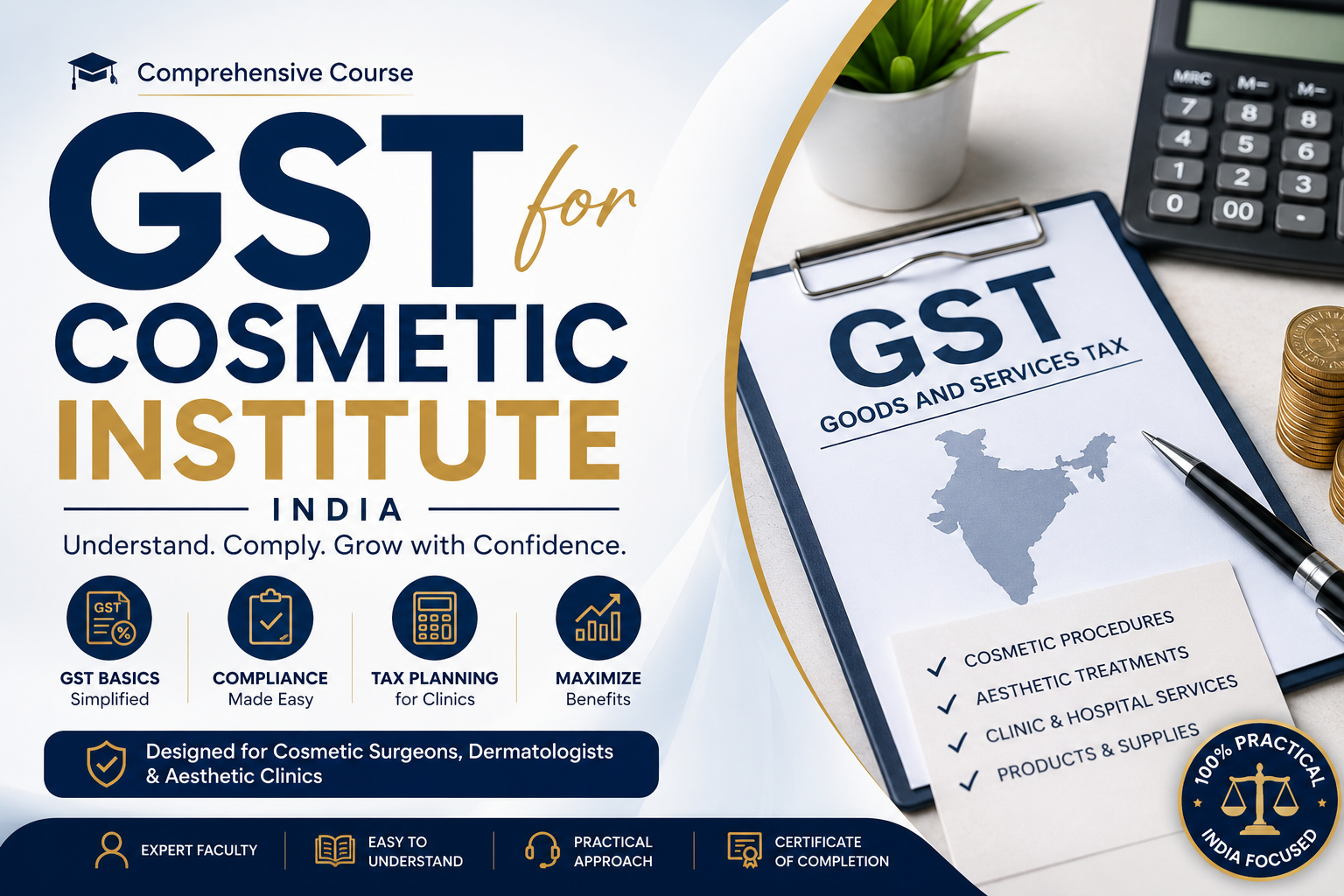
In today’s growing aesthetic and cosmetic industry, many doctors and surgeons are opening cosmetic clinics and training institutes. With this growth, one important topic that often creates confusion is GST compliance.
Understanding GST for cosmetic institute India is very important for running a legally compliant and financially structured practice. Whether you are running a cosmetic clinic or an aesthetic training program, GST rules must be clearly understood.
At Elegance Vidhyalay, under the guidance of Dr. Ashutosh Shah, we help doctors not only in clinical training but also in understanding practical aspects of running a professional cosmetic practice in India.
GST (Goods and Services Tax) is a unified taxation system applied to goods and services in India.
In cosmetic and aesthetic practice, GST may apply to:
Dr. Ashutosh Shah often emphasizes that doctors should understand both clinical and financial structure of their practice for long-term stability.
Yes, GST may apply depending on service type and business structure.
Proper classification is very important for compliance.
Doctors and surgeons may require GST registration if:
Proper documentation ensures smooth registration.
Training programs are a major part of modern aesthetic education.
At Elegance Vidhyalay, programs such as IAAPS Accredited Cosmetic Surgery Fellowship are structured for practical learning under Dr. Ashutosh Shah.
In general:
Common GST structure includes:
Doctors should always confirm classification with a professional advisor.
Many doctors face confusion in:
Dr. Ashutosh Shah advises maintaining clear separation between clinical practice and educational activities for smooth operations.
Proper GST compliance helps doctors and institutes with:
It supports long-term growth of cosmetic practices.
If a doctor runs:
Then:
This helps maintain clarity and compliance.
GST for cosmetic institute India is an important part of running a professional aesthetic practice. Doctors and surgeons must understand how taxation applies to clinics and training institutes.
At Elegance Vidhyalay, under Dr. Ashutosh Shah, we focus on guiding doctors not only in clinical excellence but also in practice management and compliance.
A clear understanding of GST helps build a stable, scalable, and legally safe cosmetic practice.
Yes, depending on the nature of services and turnover.
In many cases, essential medical treatments are exempt, but cosmetic procedures may not be.
Yes, most cosmetic training and fellowship programs are taxable.
Generally, it is around 18% for training and consultancy services.